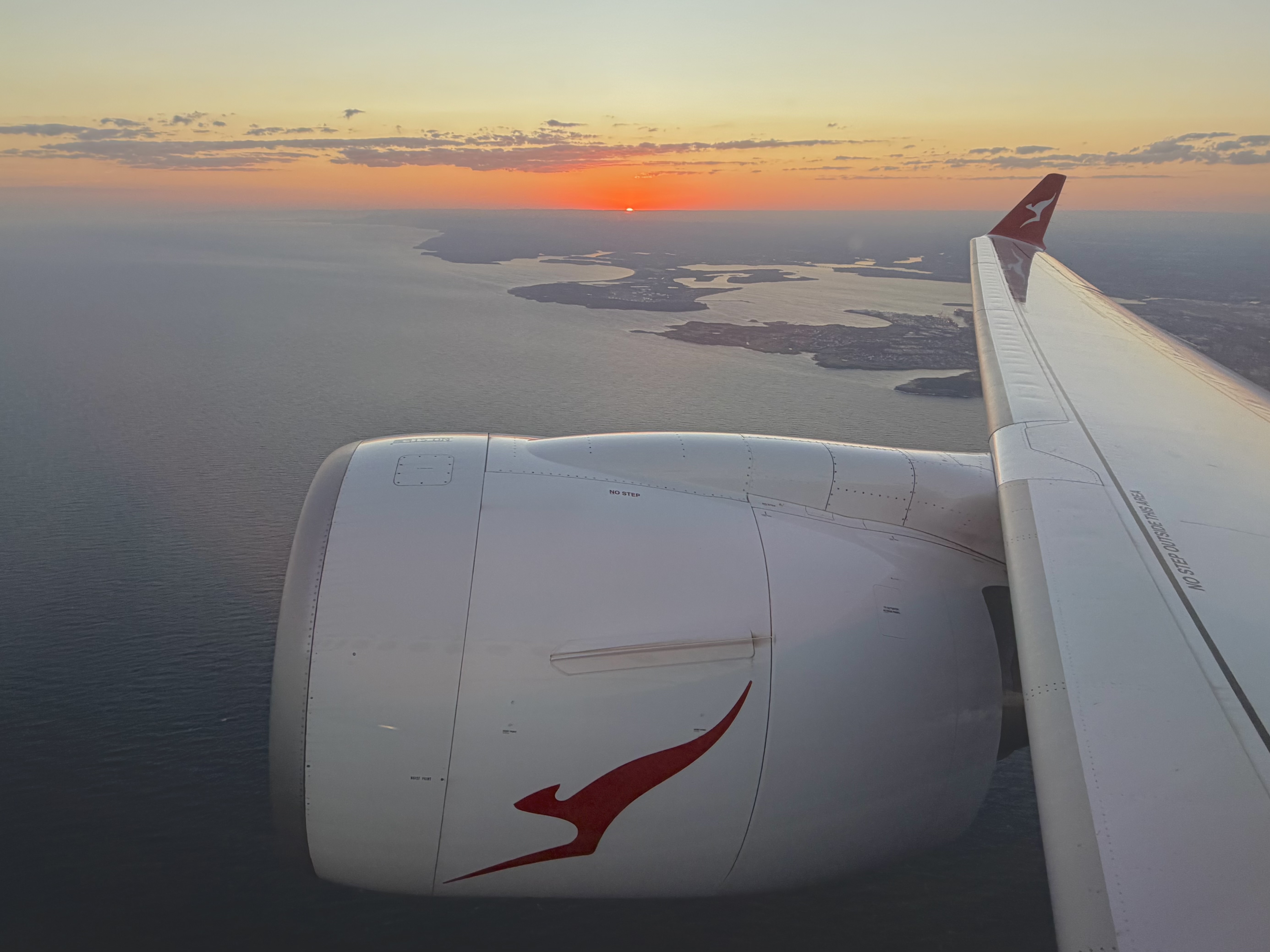
Taking a domestic flight around Australia with Qantas looks a little different these days.
As part of a major investment in new aircraft, Qantas is replacing its domestic fleet of Boeing 717 and 737 aircraft. Deliveries of Airbus A220s and A321XLRs are underway.
After being previously impressed by Qantas’ new Airbus A321XLR, I was looking forward to trying Qantas’ Airbus A220. These aircraft, unlike the XLRs, will only operate domestic routes under the QantasLink brand.
Here are my thoughts on Qantas’ A220 during a short flight from Sydney (SYD) to Melbourne (MEL) in December 2025.
Best Ways To Book Qantas Flights
I booked this one-way economy flight directly with Qantas for $97 and paid using my U.K. version of the Platinum Card® by American Express. The U.S. version earns 5x points on flights purchased directly with the airline or with AmexTravel.com (up to $500,000 per year, then 1x).
Qantas connects Dallas (DFW), Honolulu (HNL), Los Angeles (LAX), and San Francisco (SFO) with nonstop flights to Australia. It also operates a nonstop fifth-freedom route between Auckland (AKL) and New York (JFK).
Flying Qantas Airbus A220 in Economy
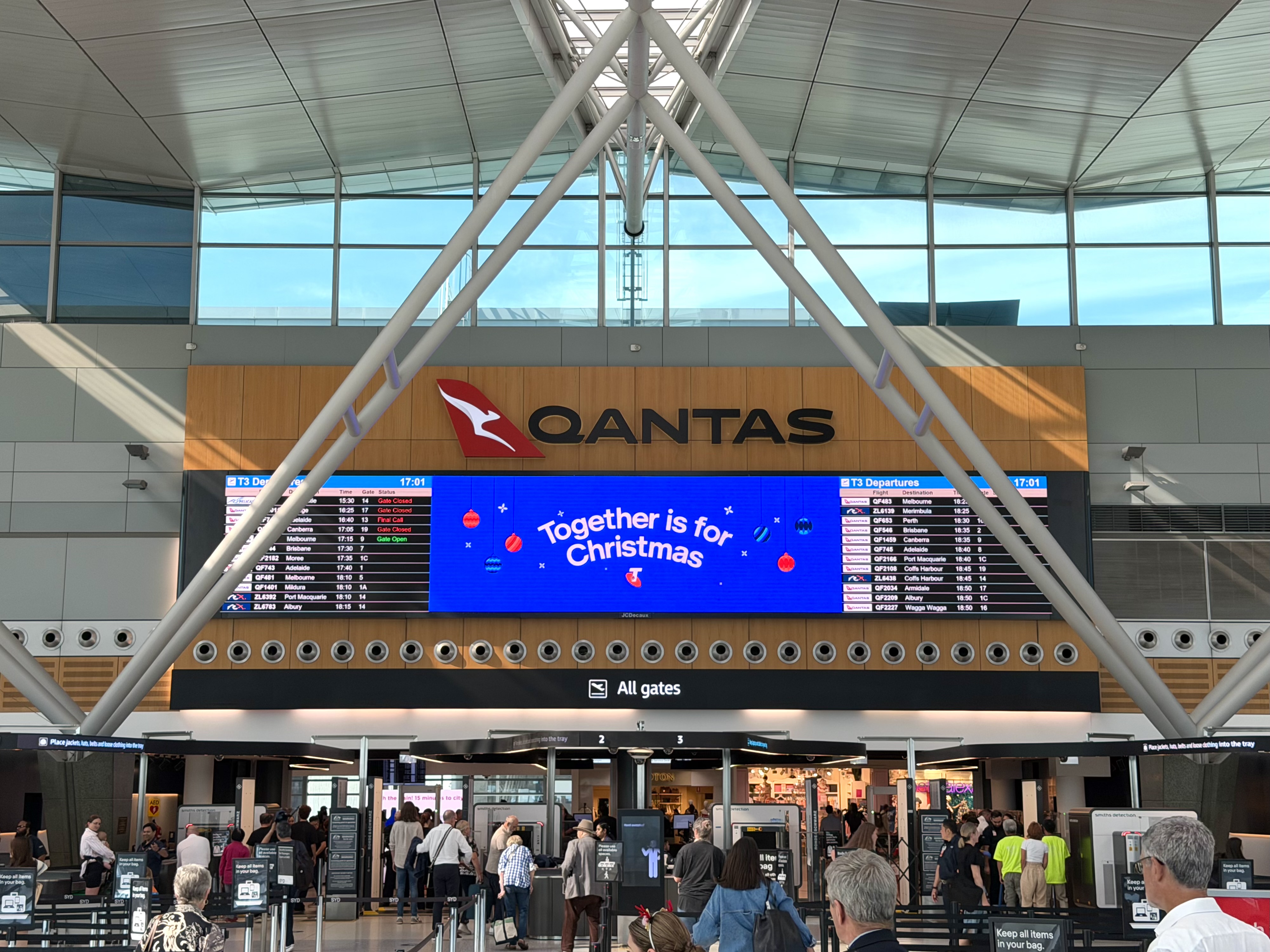
I arrived at a festively decorated Terminal 3, the home of Qantas’ domestic departures from Sydney.
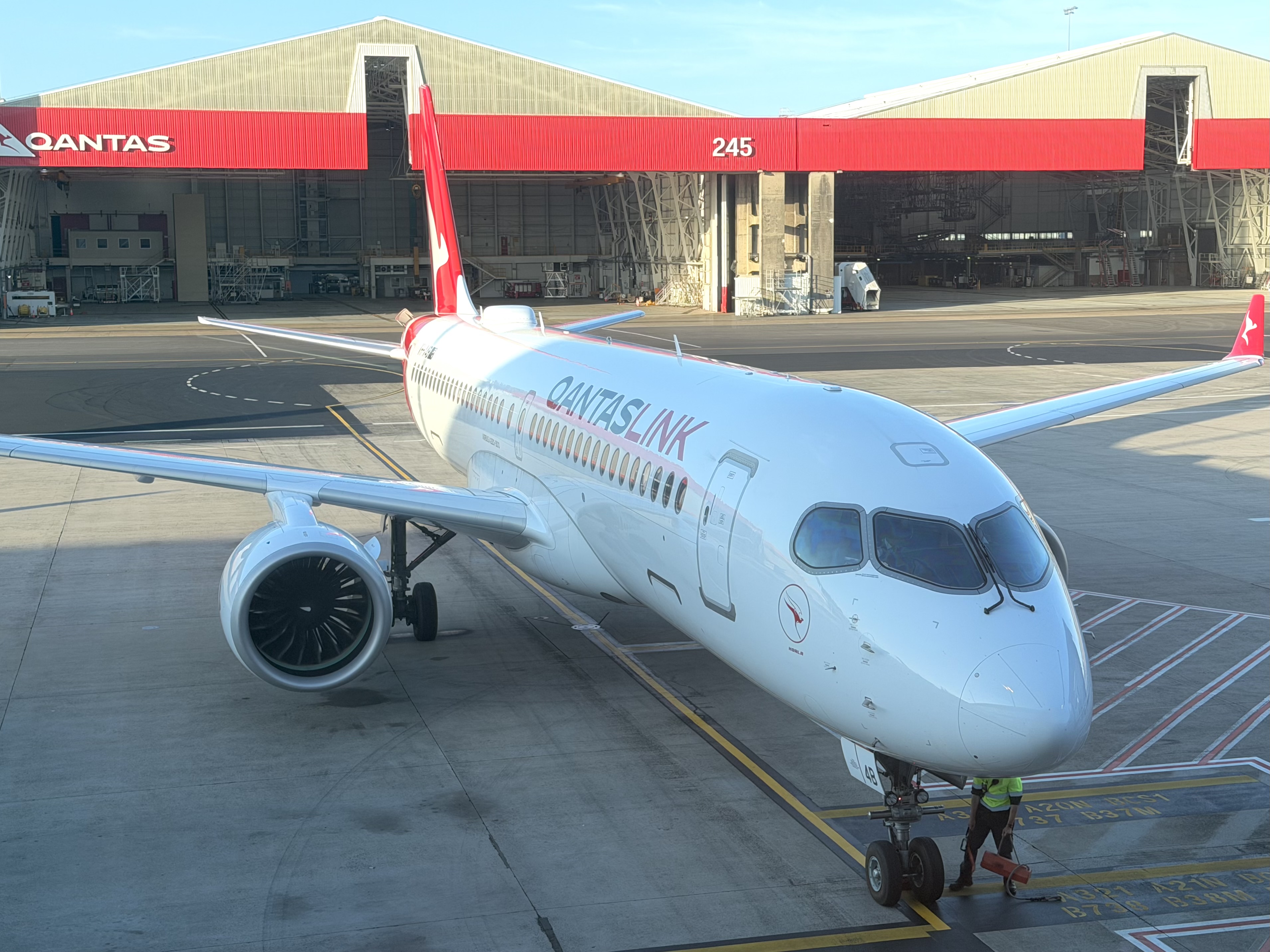
As of January 2026, Qantas has received 11 of its order of 29 Airbus A220s. It expects to complete deliveries by the end of 2027, at which point the Boeing 717 will be fully retired.
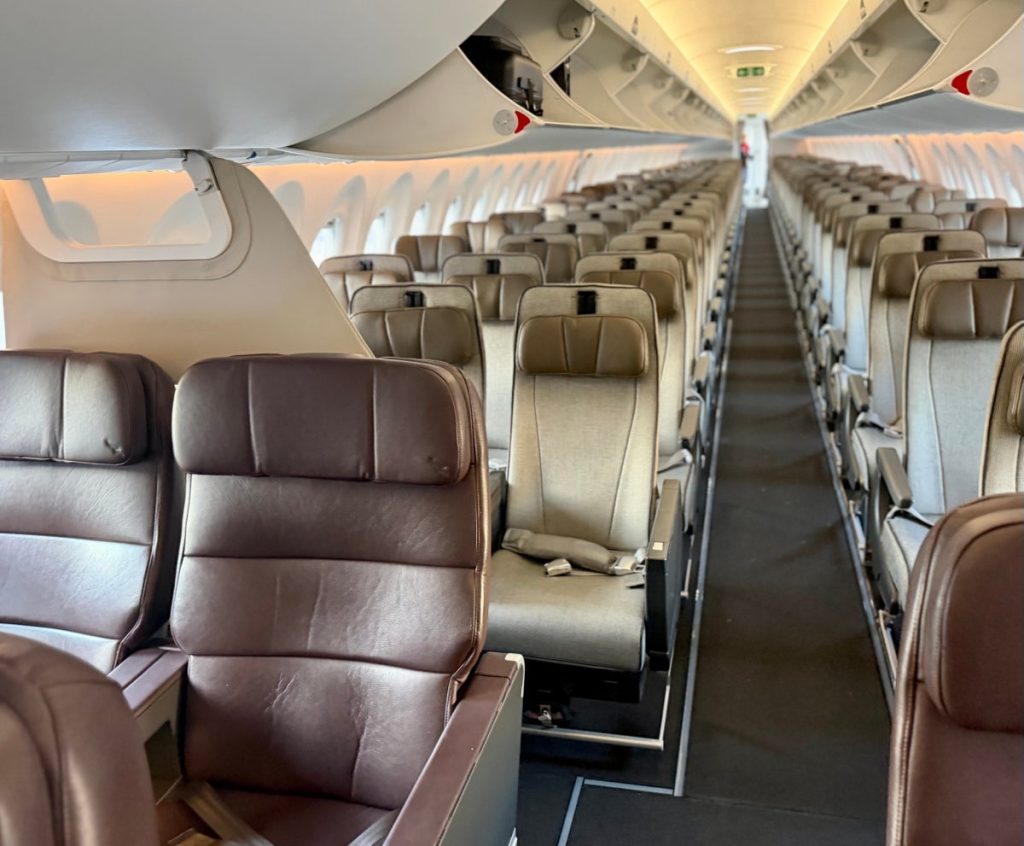
The overall look and design of the cabins are very similar to those of the Airbus A321XLR I’d flown a couple of weeks before. However, with 137 seats, the A220 is significantly smaller.
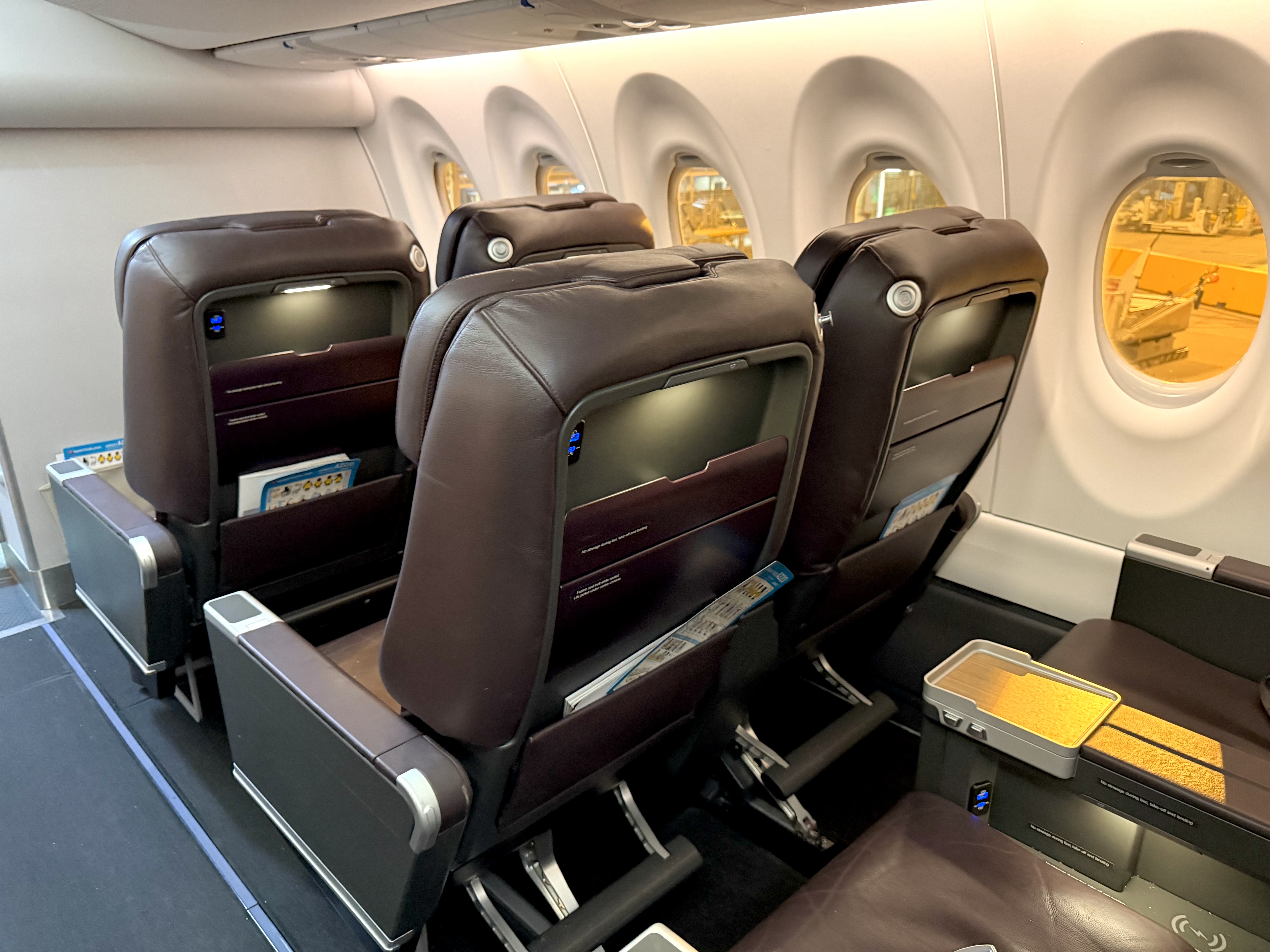
Up front in business class, there are 10 seats in a 2-2 configuration.
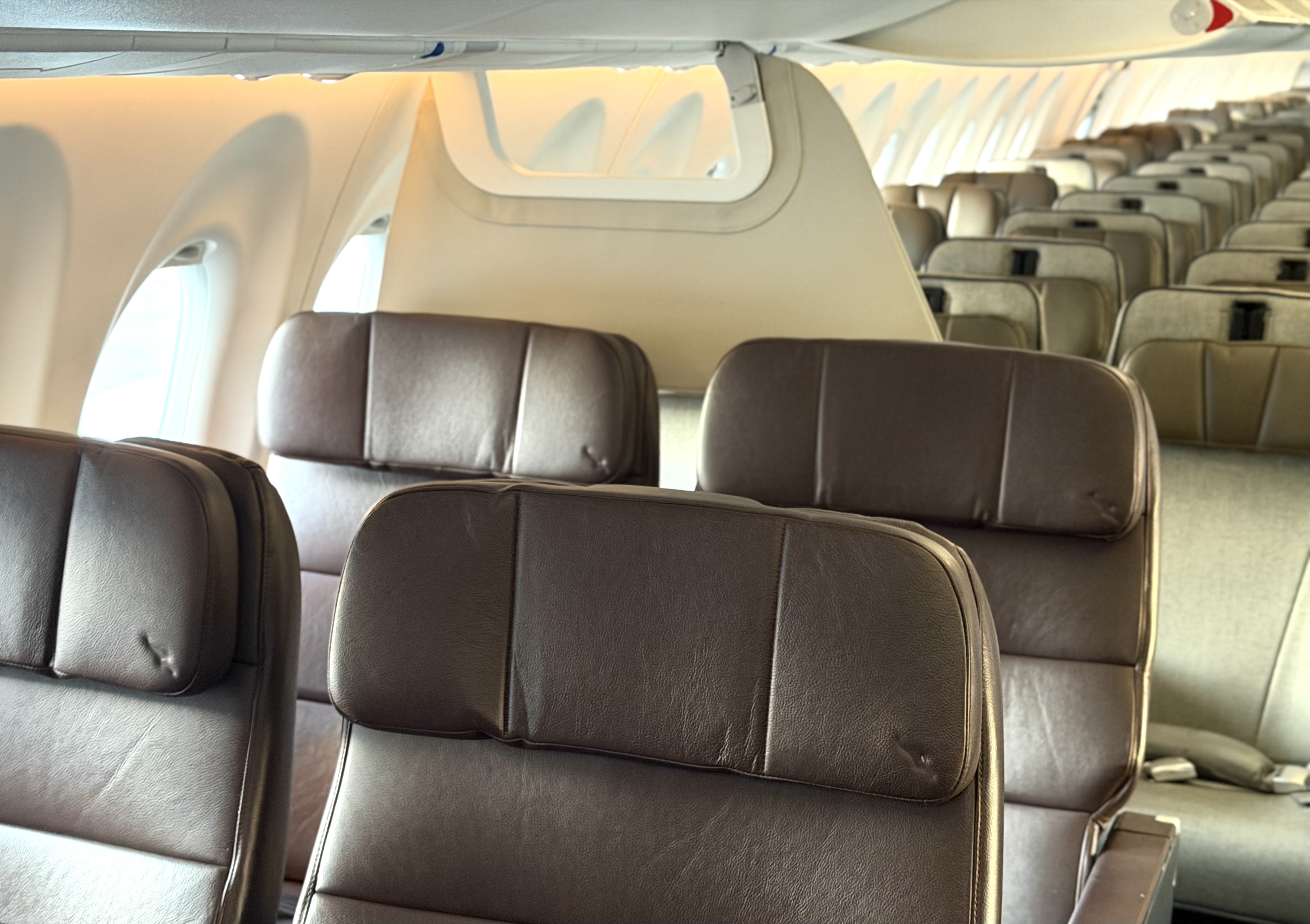
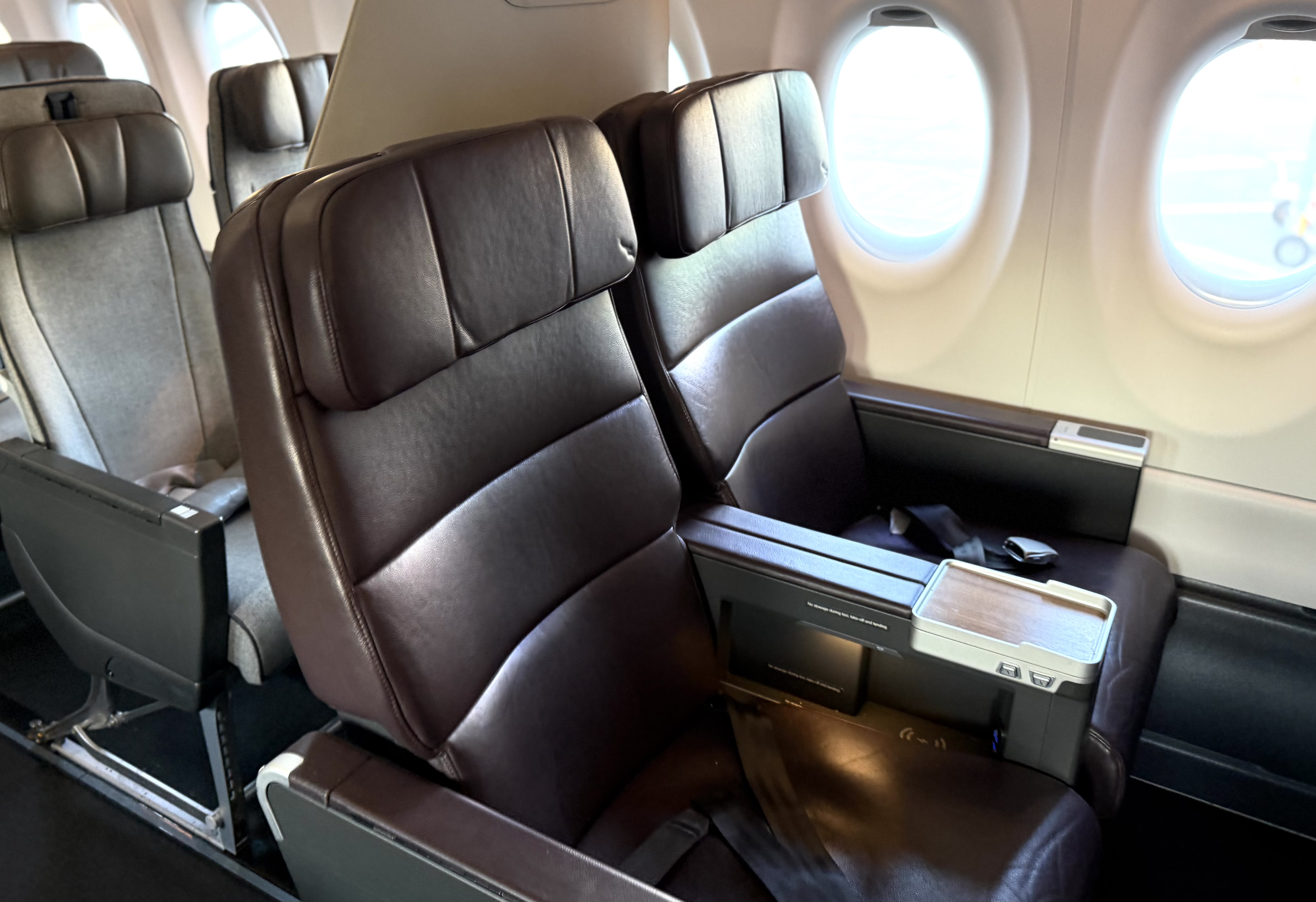
These seats have a pitch of 37 inches and a width of 23.9 inches, making them slightly wider than the domestic first class offered by American, Delta, and United. The pitch, on the other hand, is about the same on average.
Charging points (including USB-C) and calf and foot rests are standard.
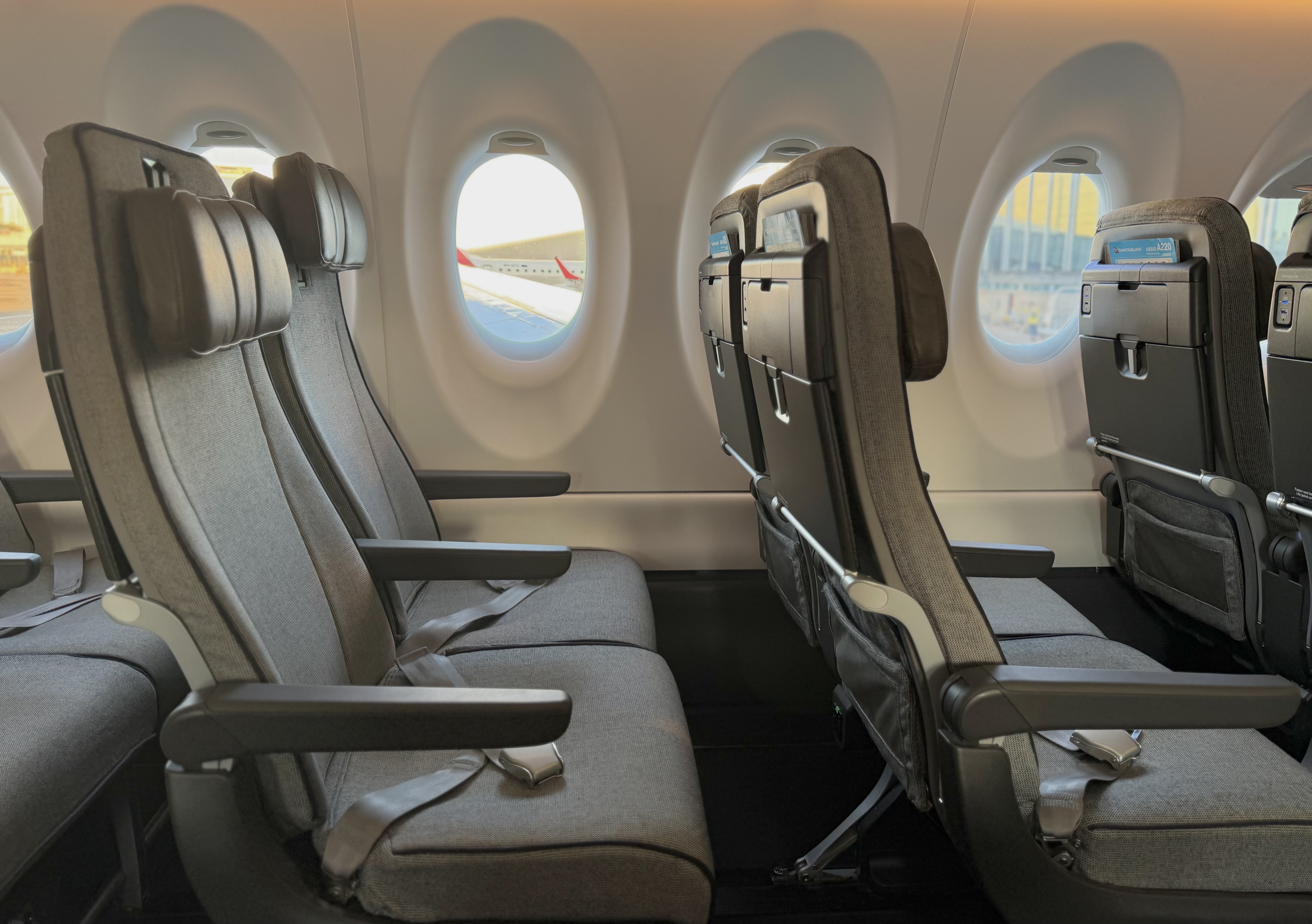
A small partition separates the business cabin from the 127 economy seats. All Airbus A220s feature this rare 3-2 configuration. Despite the glaring asymmetric design, I actually love it.
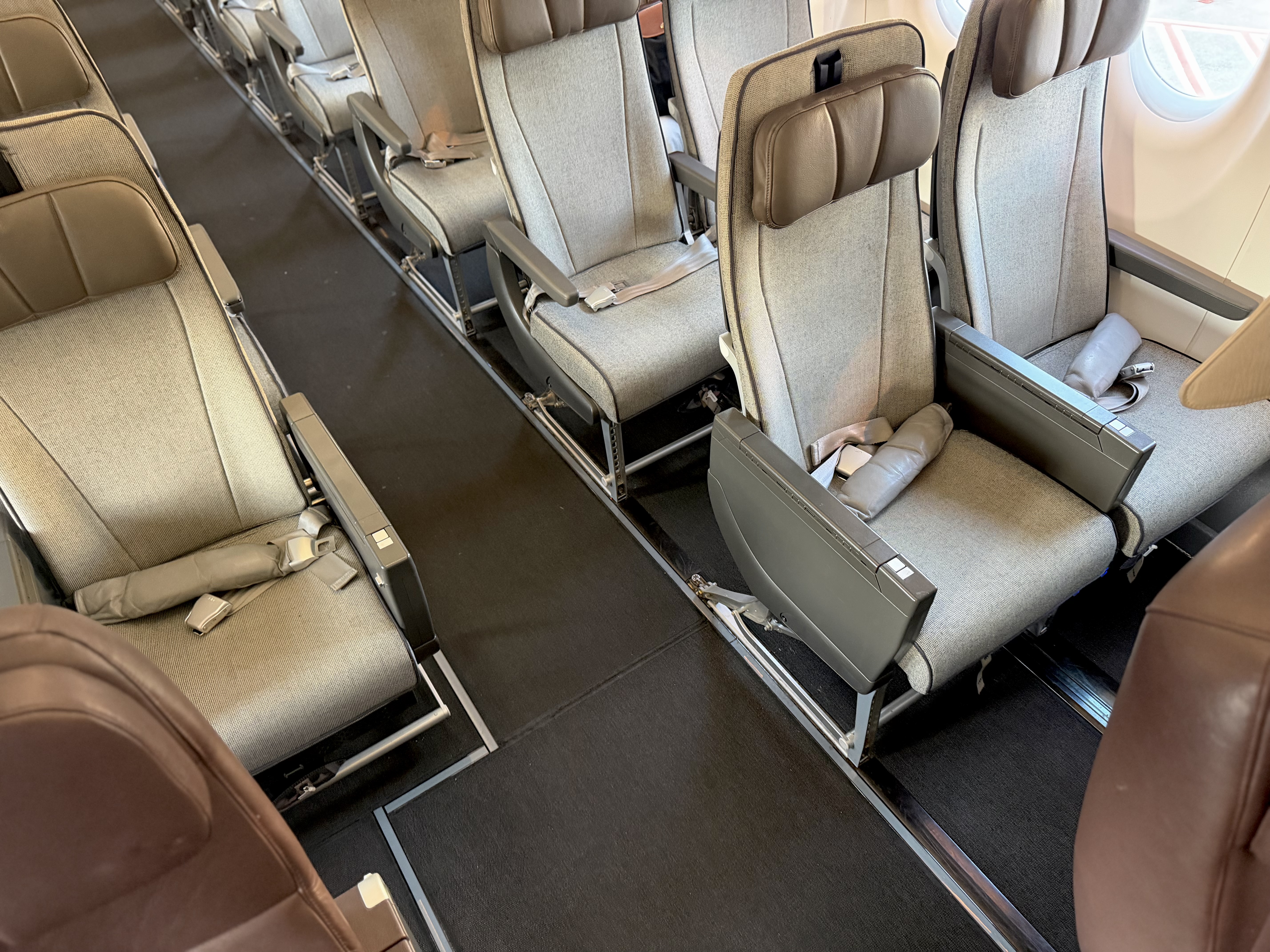
There are 2 seats on the port (left) side and 3 on the starboard (right) side.
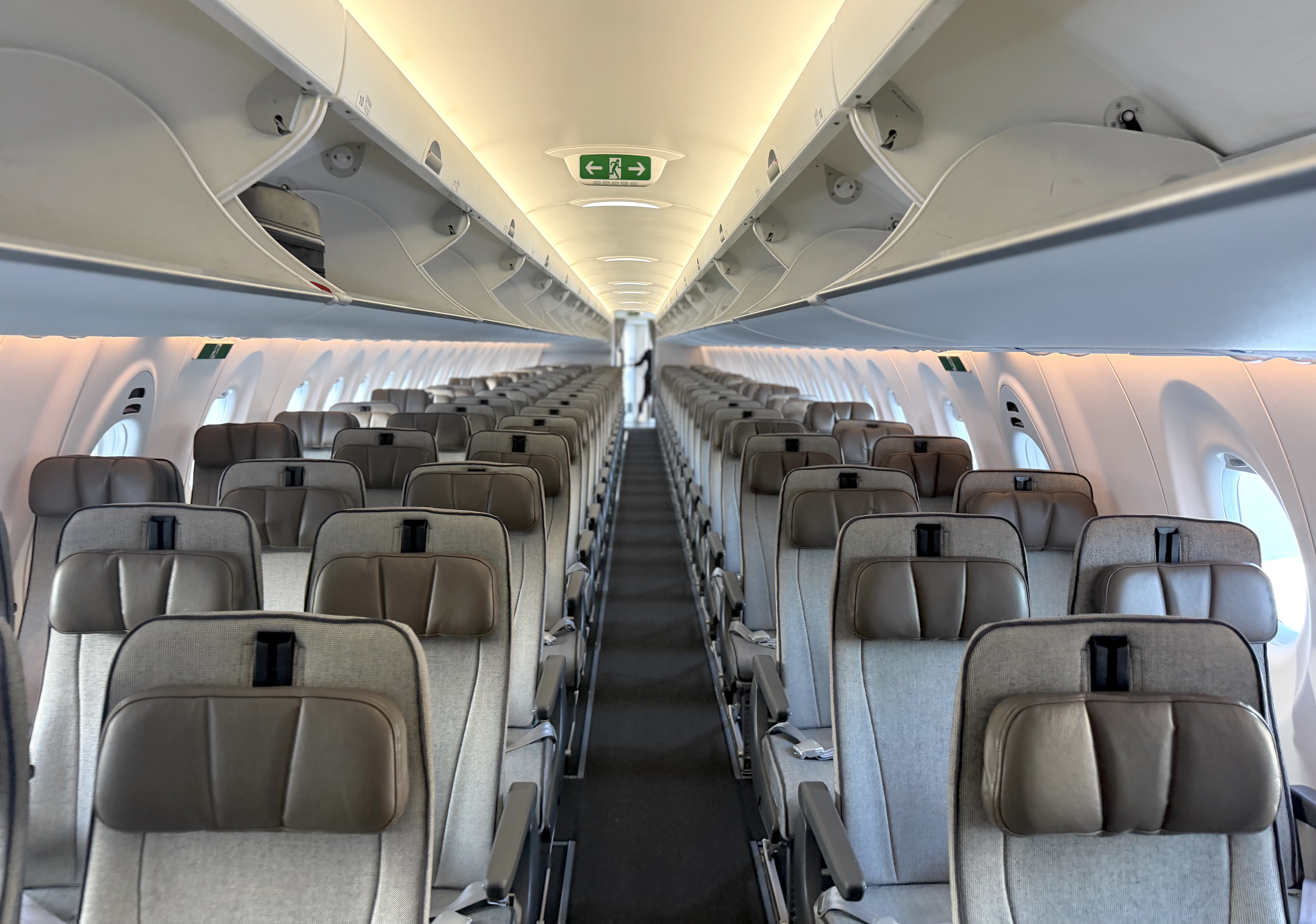
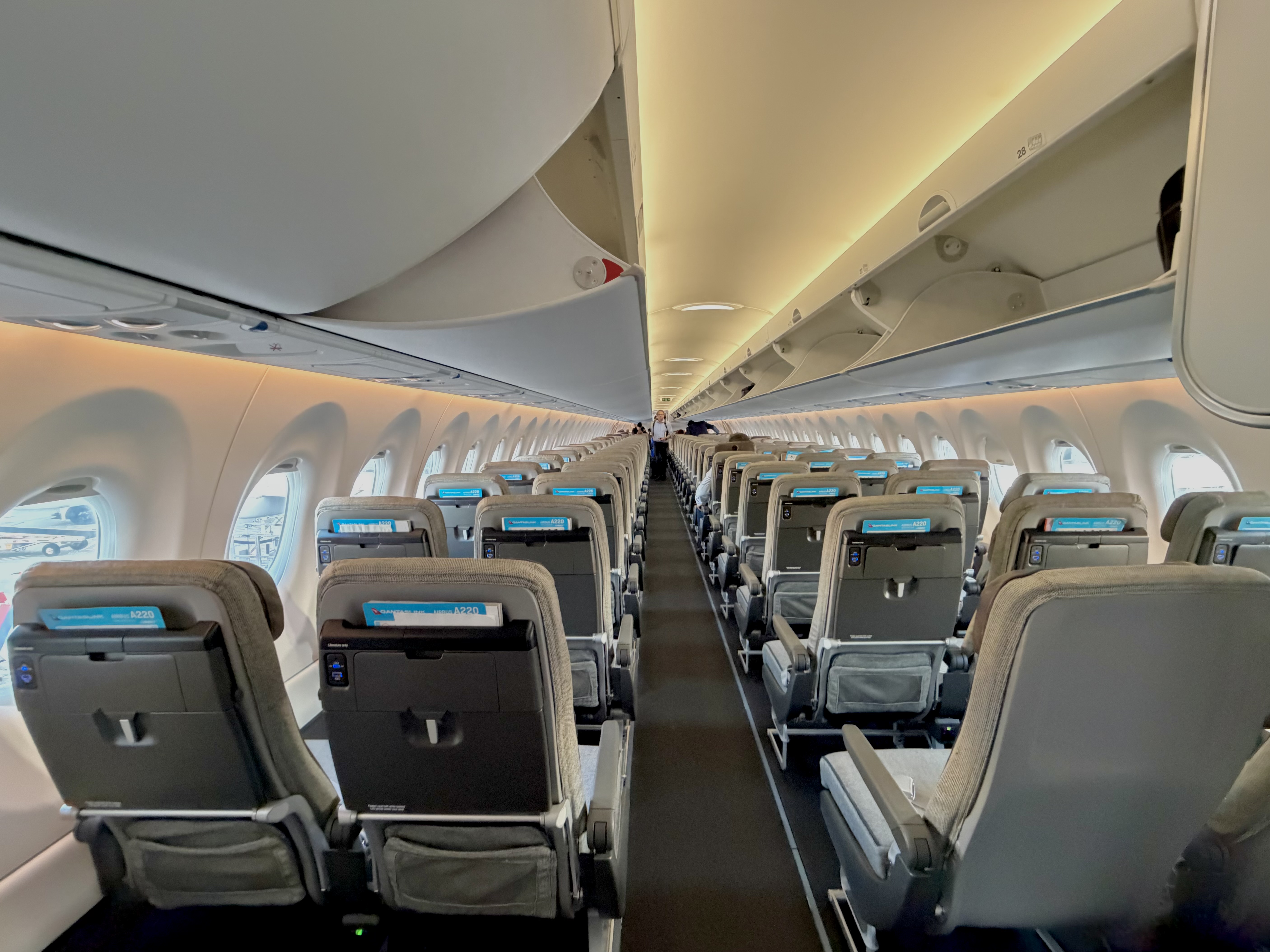
The layout is especially good for passengers traveling in pairs who can be seated together in their own row.
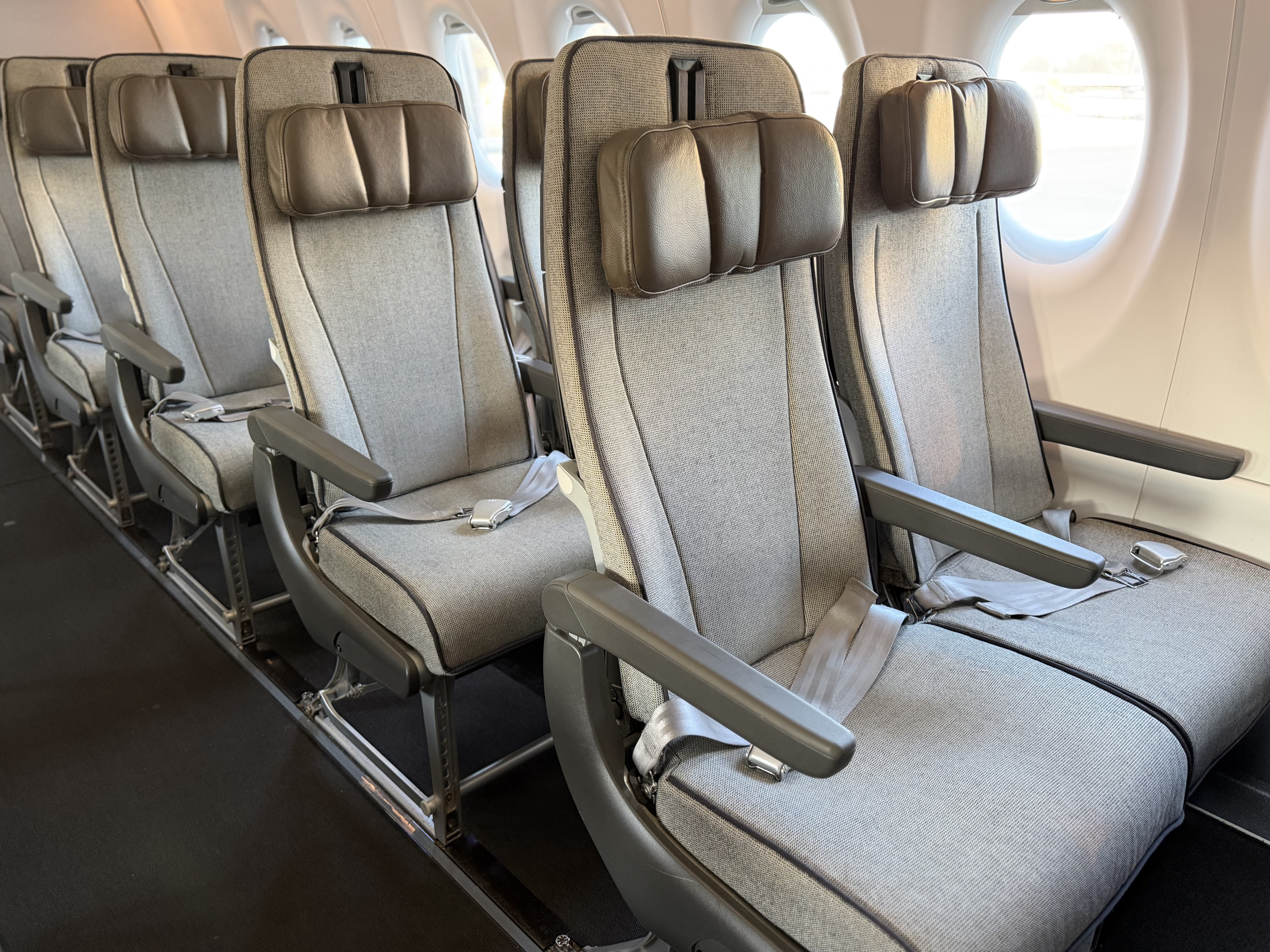
The right side of the aircraft has 3 seats in each row.
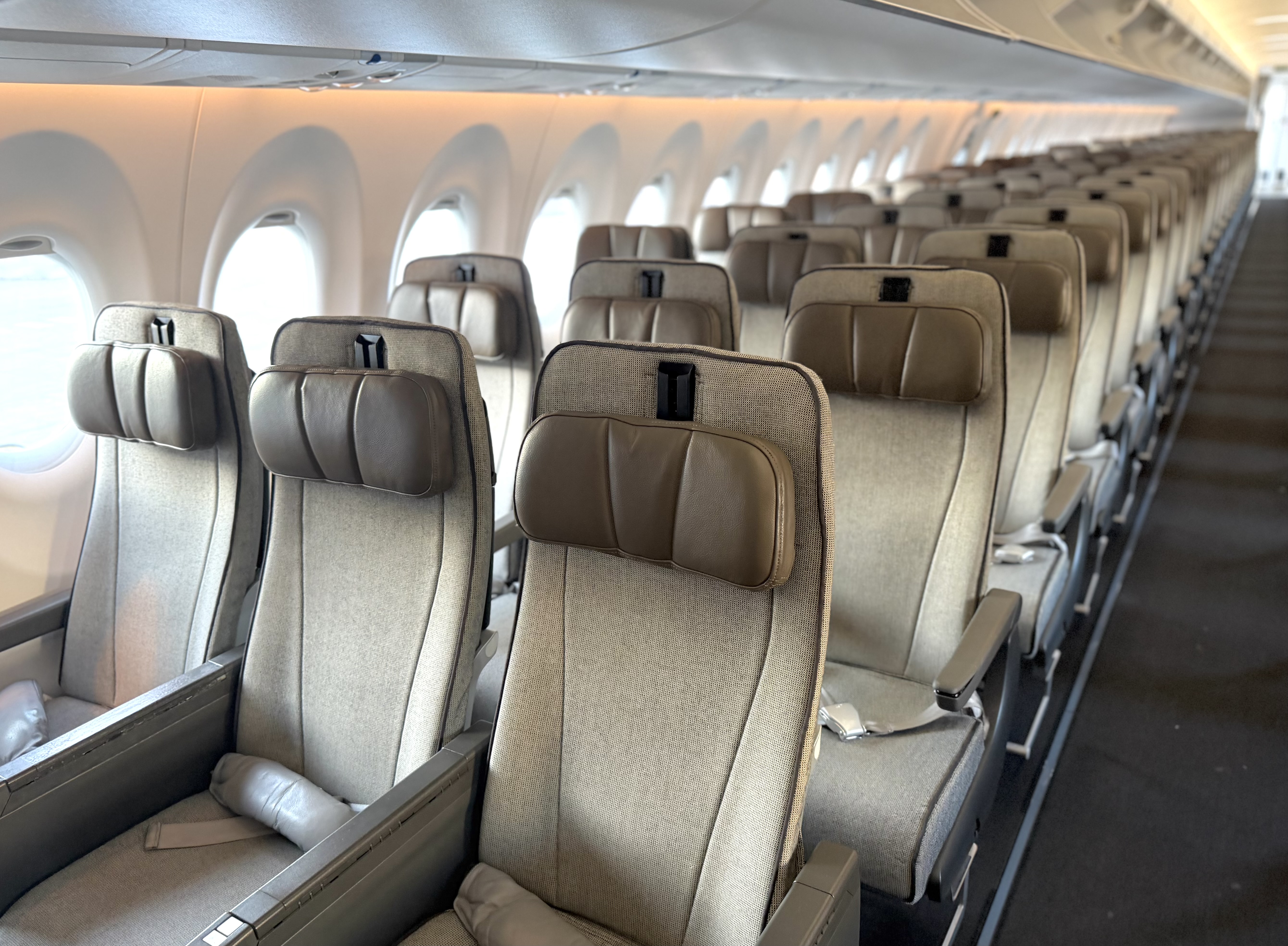
Economy seats have a pitch of 30 inches. That’s about the average for full-service carriers like Qantas.
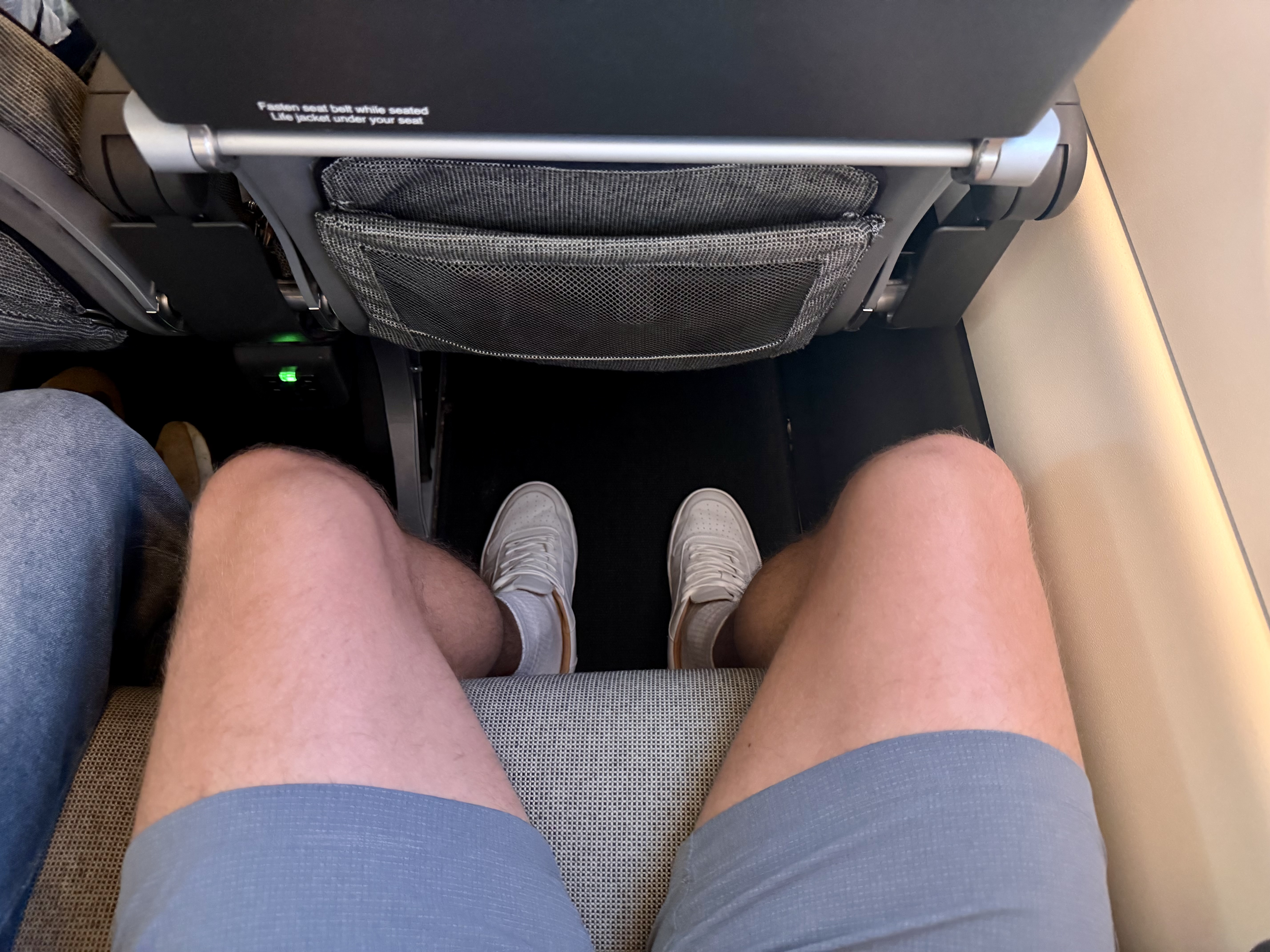
At 5 feet 8 inches tall, I had plenty of space between my knees and the back of the seat in front.
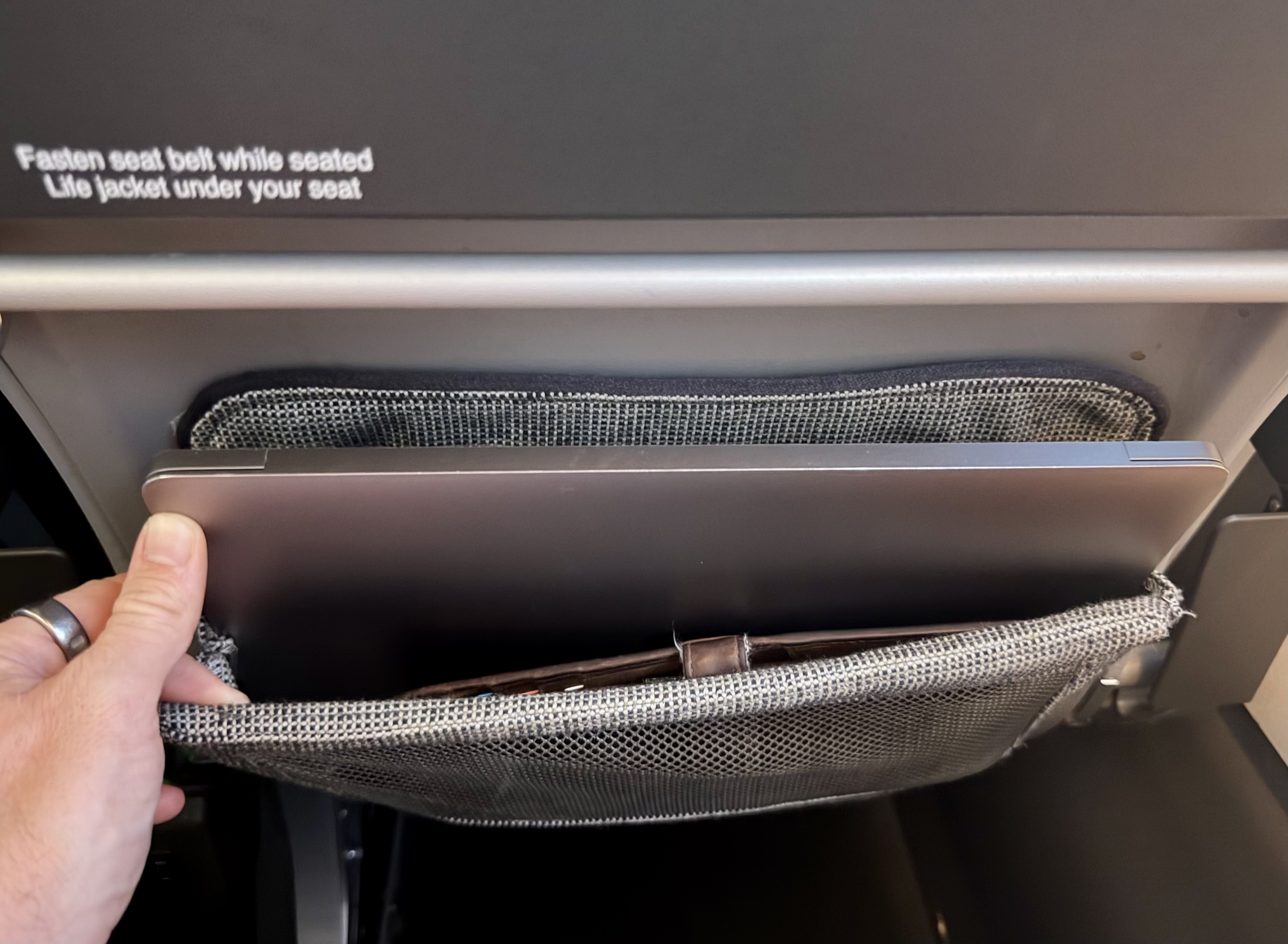
Storage was exactly what I’d expect in an economy cabin on a short-haul aircraft: a seat-back pouch. My 13-inch MacBook Air and passport wallet fit inside comfortably.
The adjustable headrests were sturdy enough to provide decent head support.
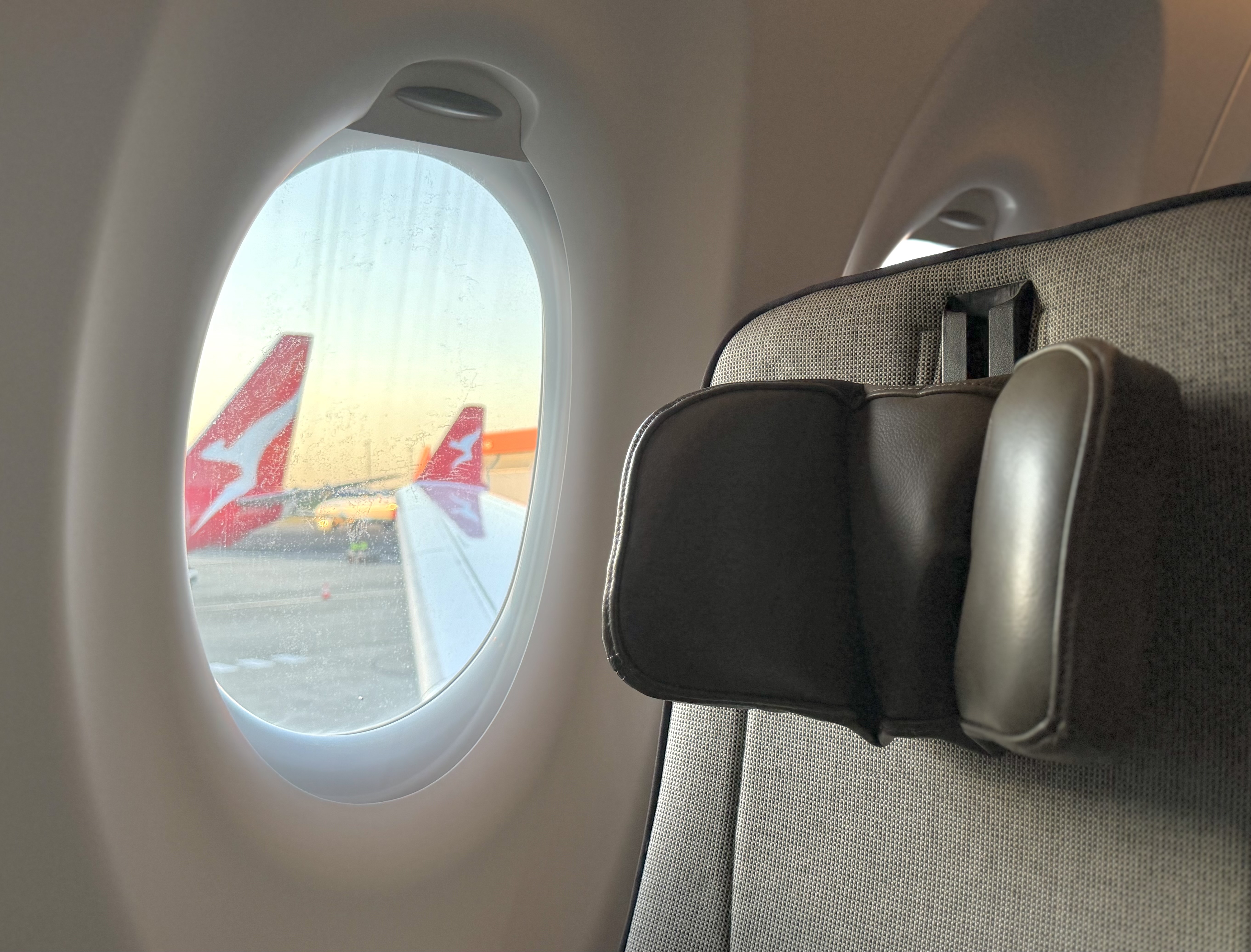
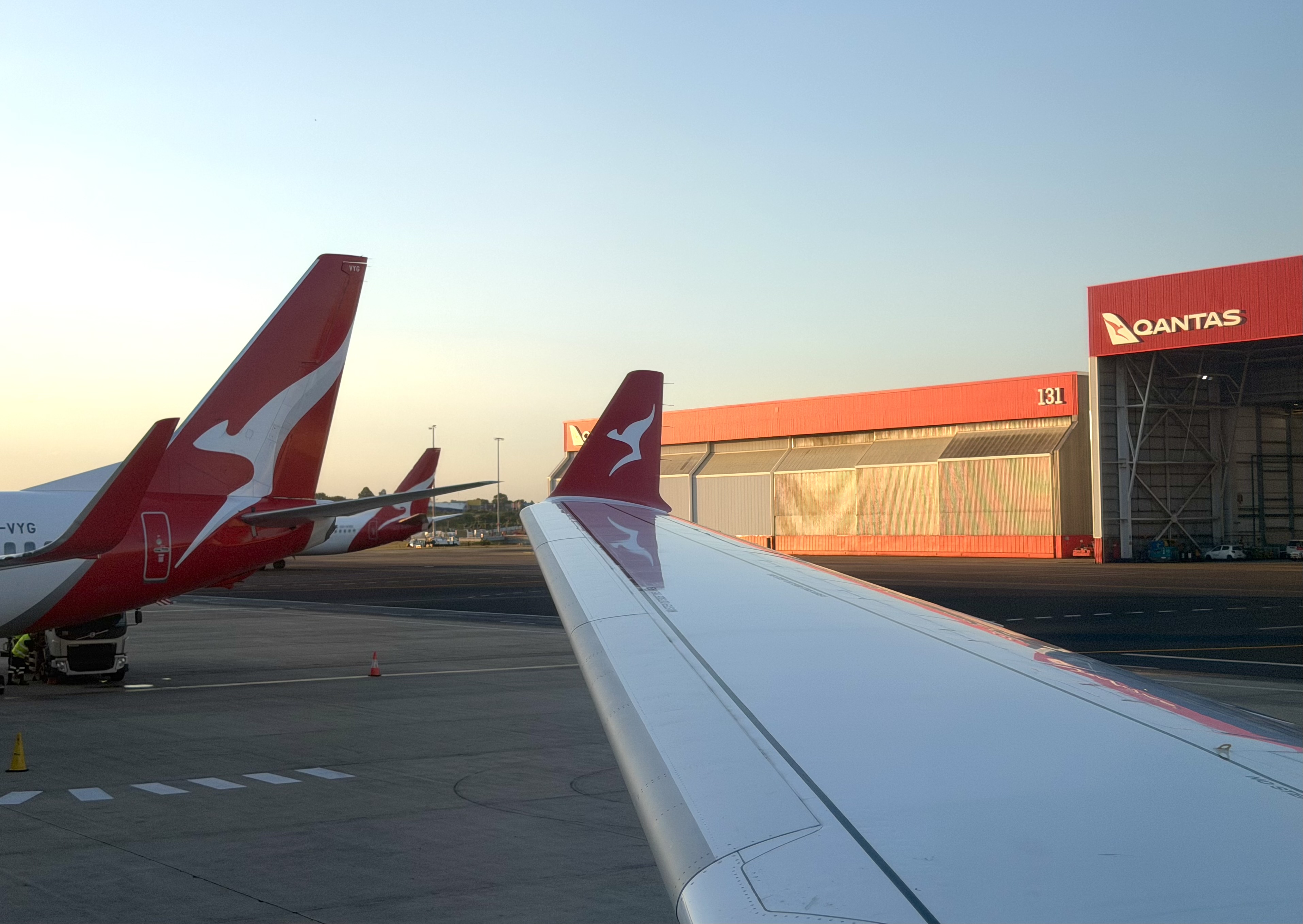
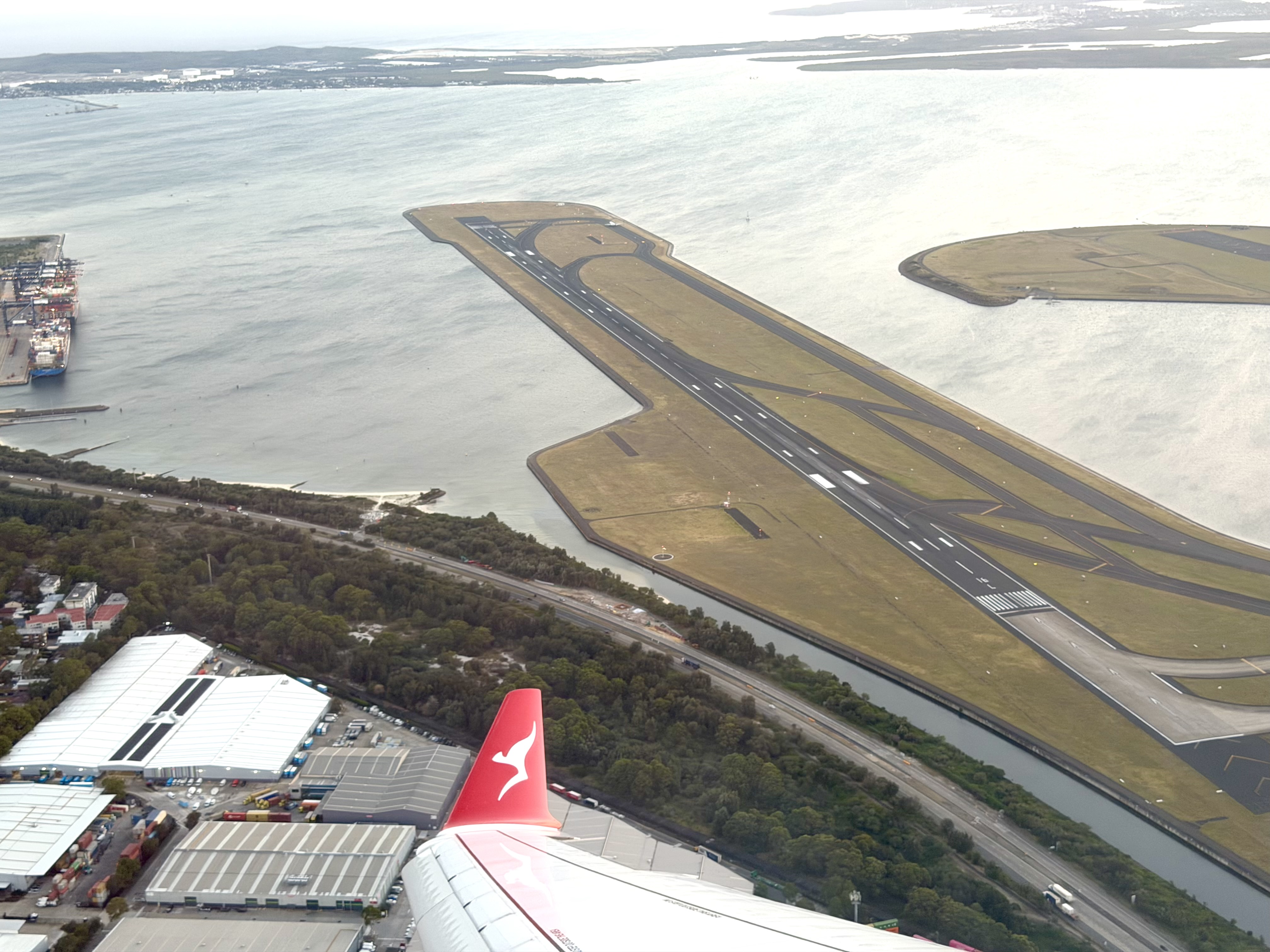
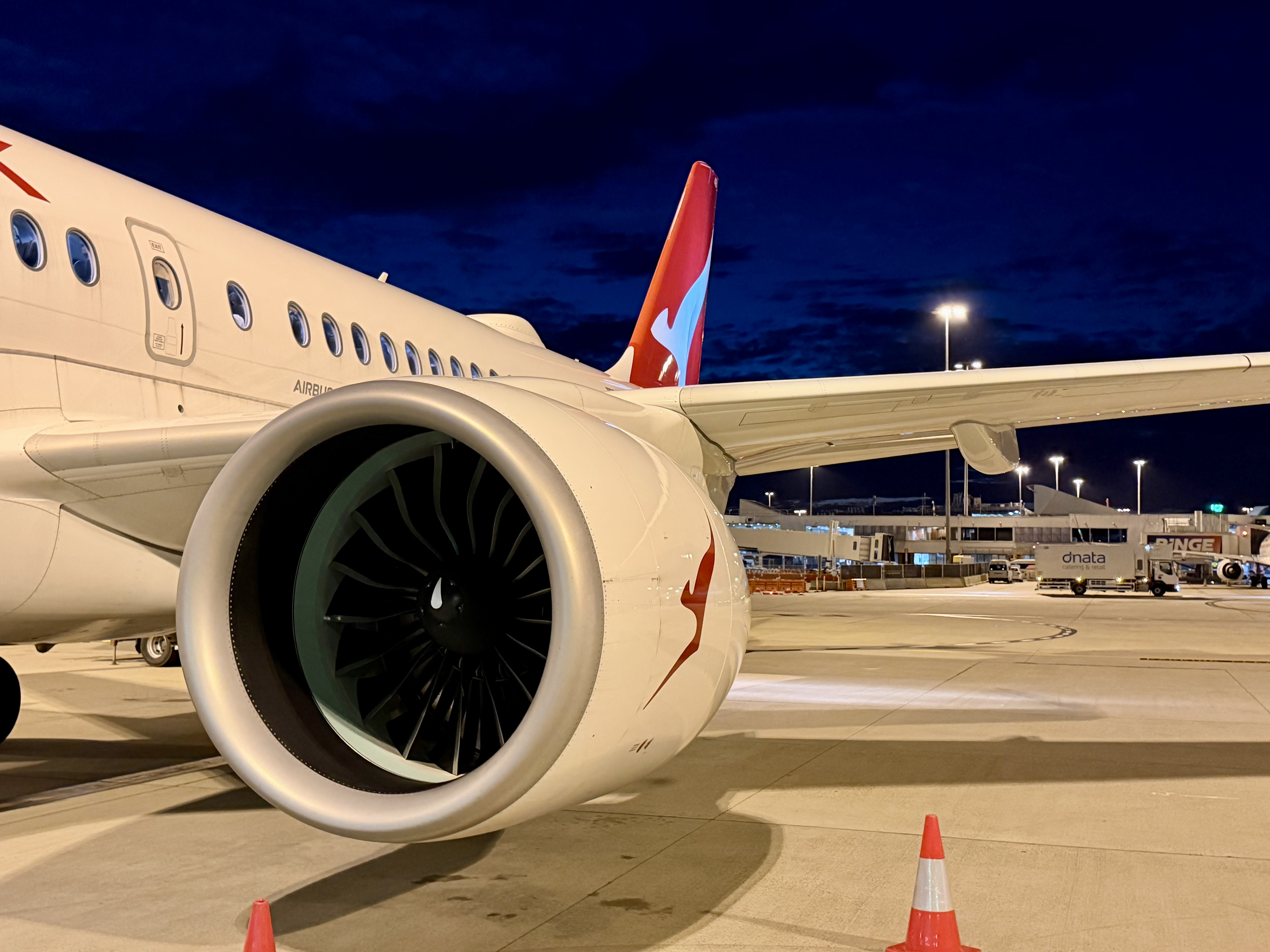
As we pushed back from the gate, I noticed how similar the A220’s wingtip is to that of the Airbus A330.
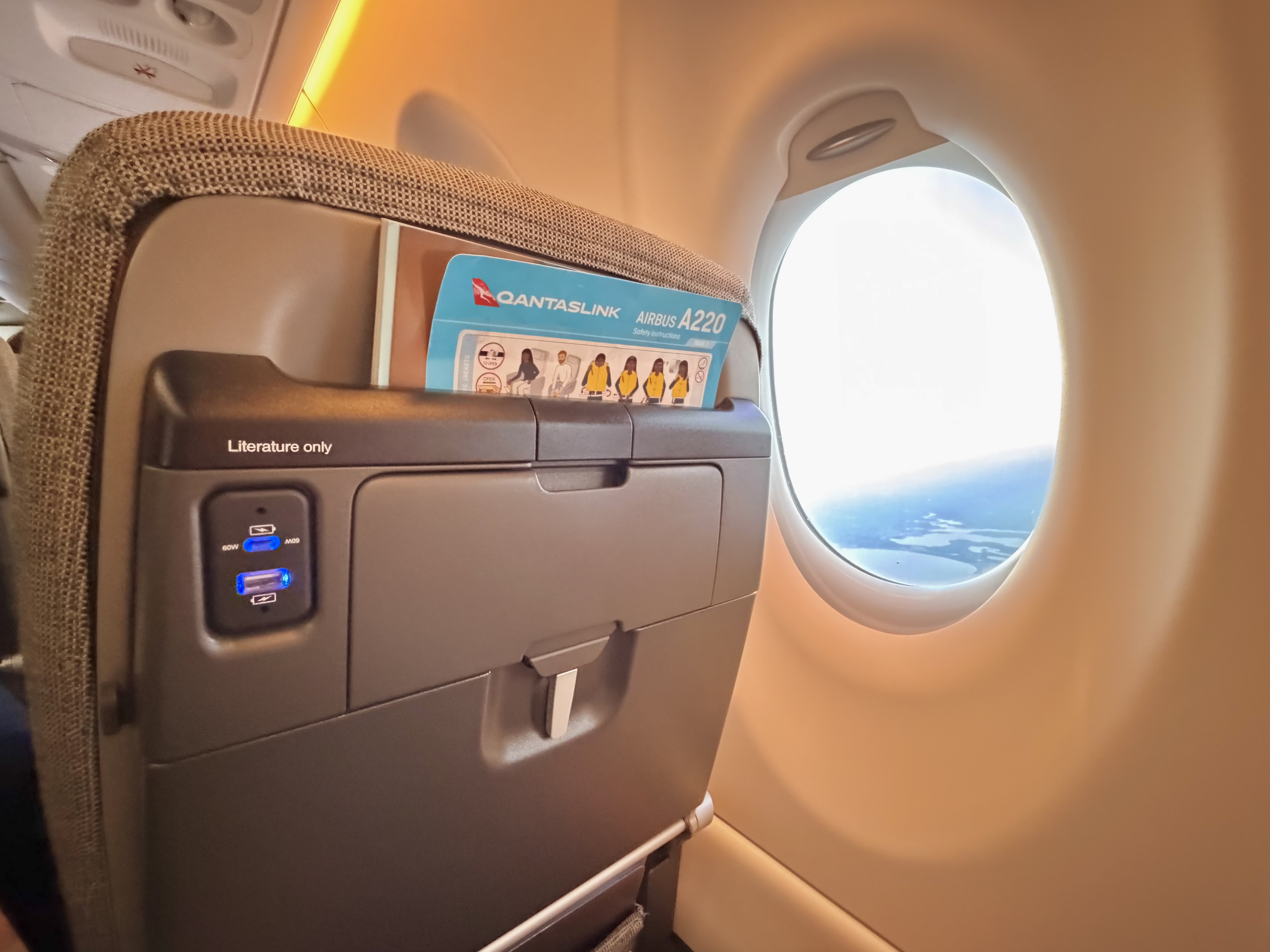
Qantas didn’t cut any corners with the seat’s features. The USB-A and USB-C ports are located within easy reach on the seatback in front.
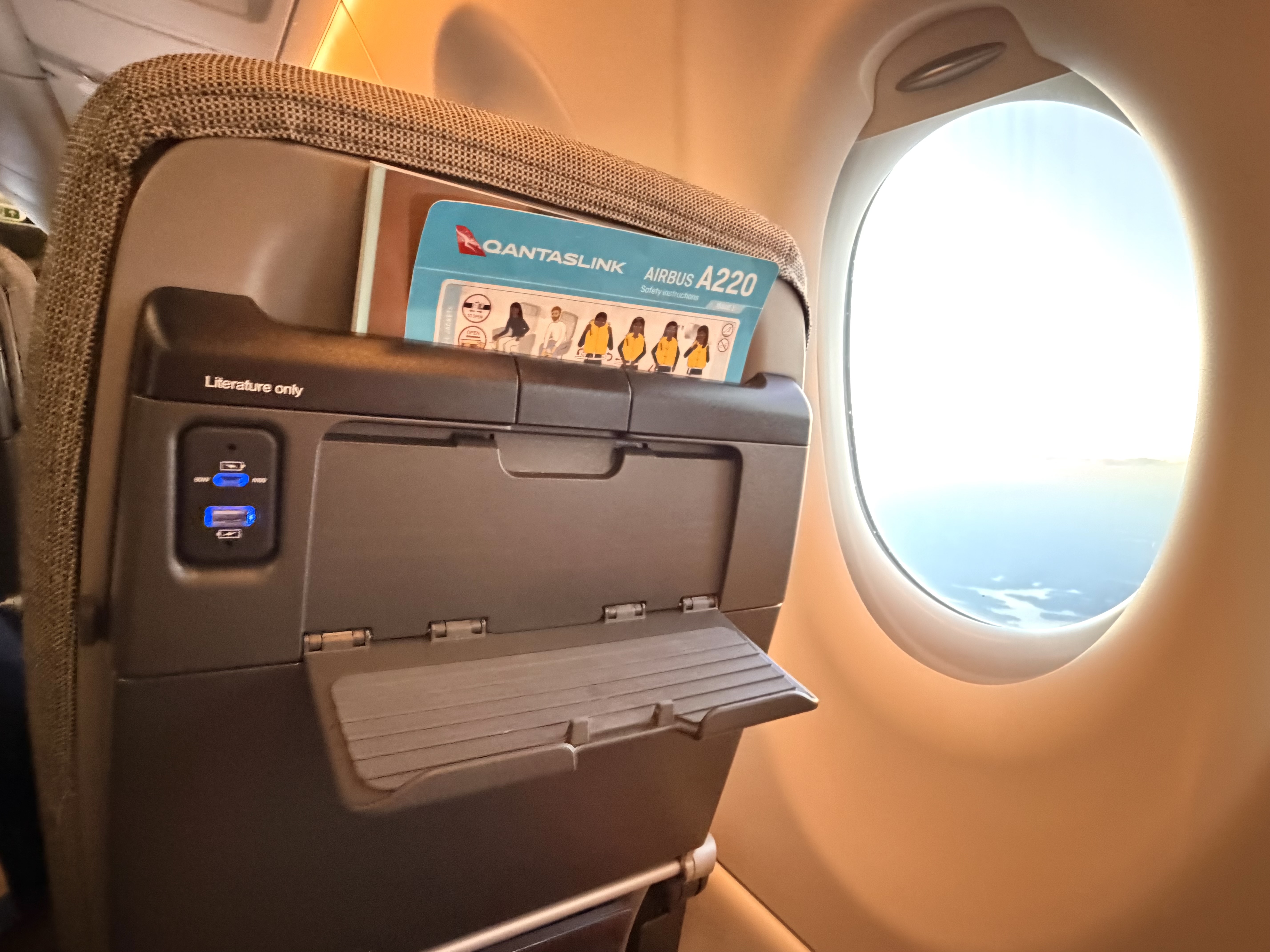
For entertainment, a device shelf folds down easily. This eliminates the need to install heavy, expensive IFE screens — a move that many full-service carriers have made in the economy cabins of their short-haul planes.
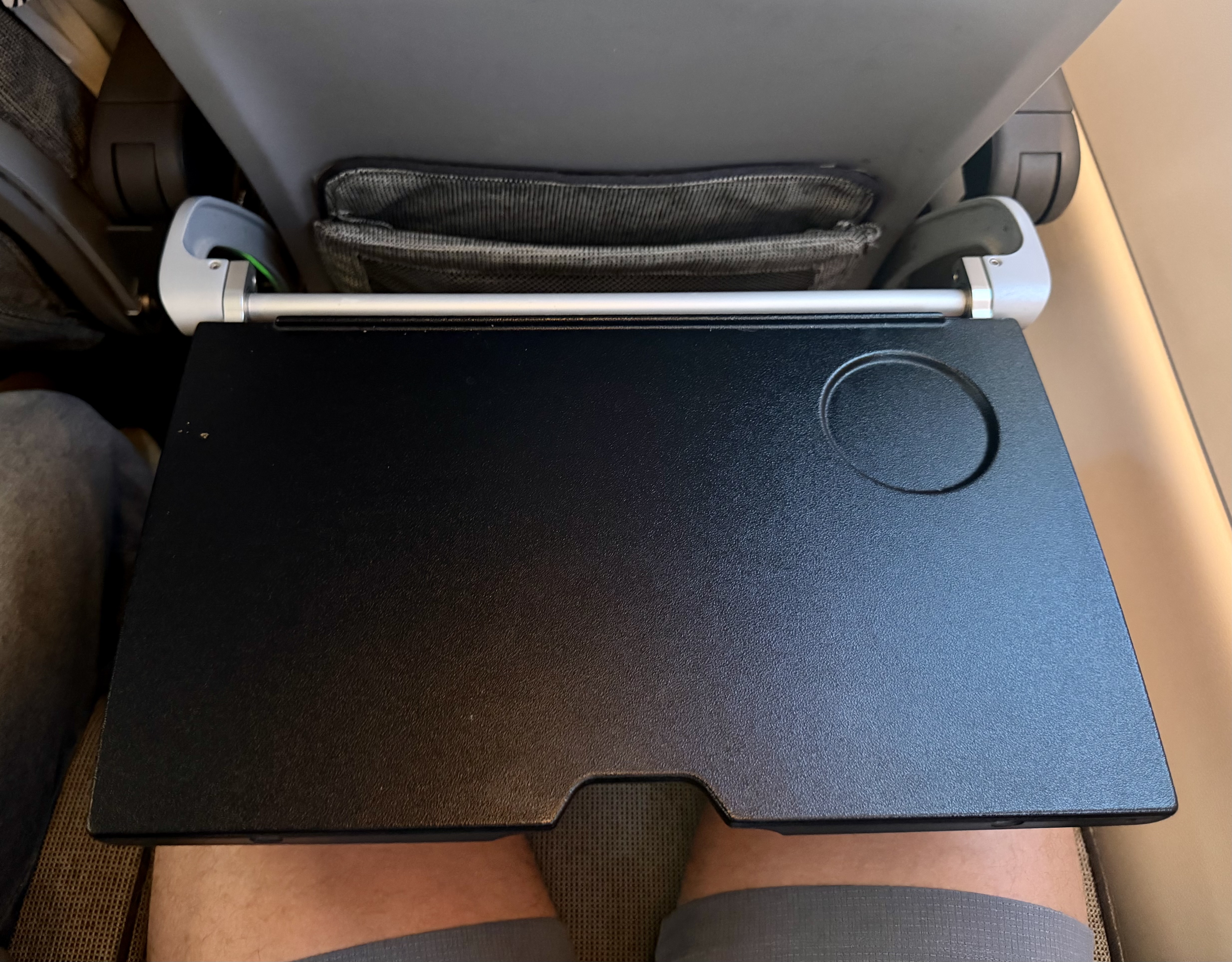
The extendable tray table was large enough to fit my 13-inch laptop comfortably. Qantas’ free, fast Viasat Wi-Fi made it easy for me to have a very productive flight.
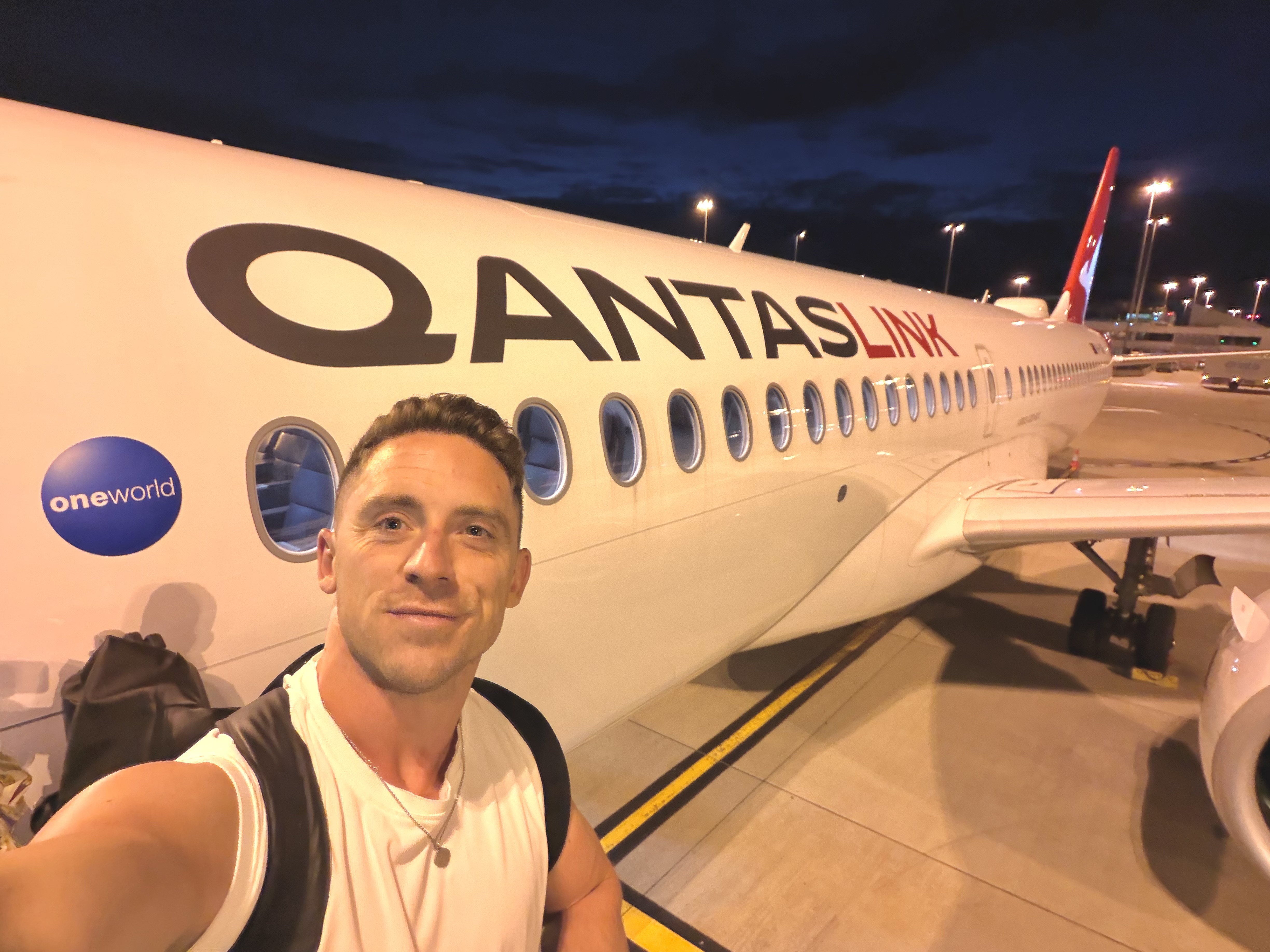
After a short flight, I deplaned at a remote stand at Melbourne (MEL). Australia prohibits taking pictures on the tarmac, and I learned that when a ground staffer corrected me.
Using My British Airways and Air France Status Simultaneously When Flying Qantas
As British Airways and Qantas are both members of the Oneworld alliance, I was able to add my British Airways Club number to this flight booking to earn Avios and status-earning Tier Points. However, my BA Silver status (Oneworld Sapphire) would only afford me access to Qantas Club lounges rather than Qantas’ more premium business class lounges.
In July 2025, Air France and Qantas deepened their partnership by adding extra codeshares and loyalty perks. I hadn’t been able to find much in-depth, concrete coverage on exactly what this would mean when flying Qantas using a Flying Blue membership number.
My Flying Blue Platinum status, unlike BA Silver status, qualifies me as a top-tier Qantas Frequent Flyer Platinum member, which comes with access to Qantas’ premium lounges. With that, I showed my Air France Platinum/Qantas Platinum status at the business class lounge reception and was welcomed in, even though my BA Club number was attached to the booking.
Final Thoughts
I had a very pleasant flight flying Qantas’ Airbus A220 from Sydney to Melbourne. I’d actively choose a flight operated by this comfortable, modern, spacious-feeling aircraft over one of Qantas’ aging Boeing 737s.
It’s great to see Qantas is investing in its short-haul passenger experience. Together with the Airbus A321XLRs, these aircraft will gradually replace the airline’s less fuel-efficient and worn-out Boeing 717 and 737s, which make up the majority of its short-haul fleet.
Qantas’ long-haul fleet is changing, too. Hopefully, we’ll only have to wait until next year for its Airbus A350-1000 ULRs to start the long-awaited Project Sunrise nonstop flights from the U.S. and U.K. to Australia.