
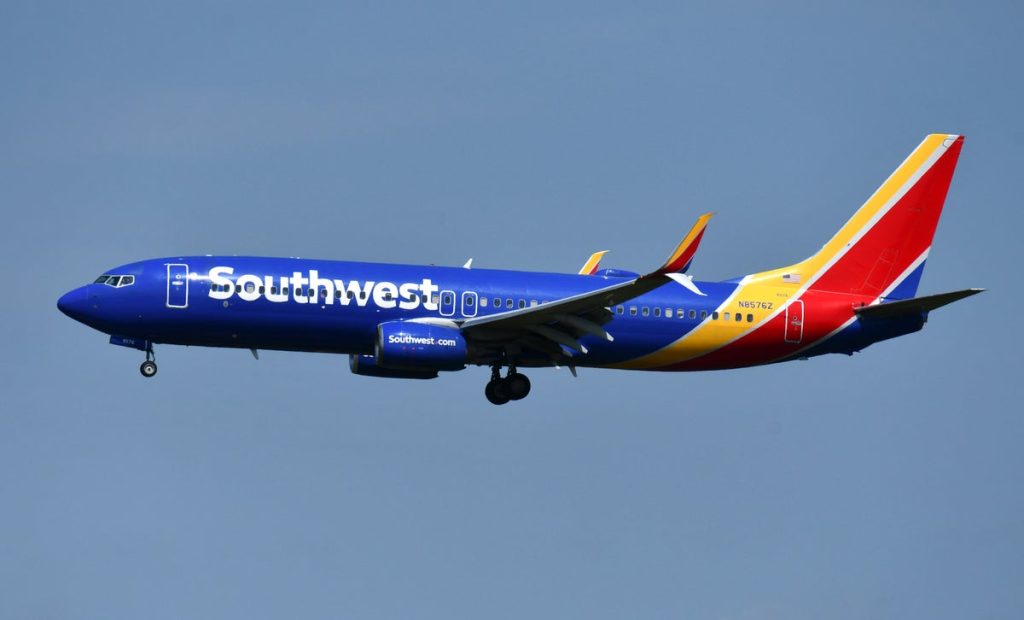
Southwest Airlines looks a lot different now than it did a year ago: assigned seating, checked bag fees, premium cabin products, and other big changes have surprised many people. At this point, it’s fair to ask: Is Southwest still Southwest?
Apparently, Southwest isn’t done changing itself. There’s a new item on the list that may be the boldest yet: long-haul international flights, according to the airline’s CEO.
Southwest CEO Hints at Long-Haul International Flying
Yesterday, Southwest Airlines‘ CEO, Bob Jordan, said at the Bernstein Strategic Decisions Conference that the airline is seriously considering adding long-haul international flights, as first reported by AirlineGeeks. When asked how Southwest will look in 3 to 5 years, Jordan mentioned airport lounges, expanded premium products, and — potentially — service to destinations far beyond its current network.
“I think it’s likely that we’ll, over that period of time, delve into long-haul international,” Jordan said.
He was careful to note that plans are still in very early stages and no destinations have been finalized. But his framing was deliberate, and this isn’t idle speculation. He believes Southwest could become “highly relevant” in certain international markets.
Jordan said the airline would target a “handful of destinations” — aiming for 8 to 12 of them — rather than trying to build a sprawling global network.
“We’re not going to become Delta and United and American in terms of serving 120 international destinations,” he said. “It took them decades to build that.”
He did float Baltimore (BWI) as a natural anchor point for long-haul flying, given that it’s Southwest’s largest East Coast hub. But again, nothing is set.
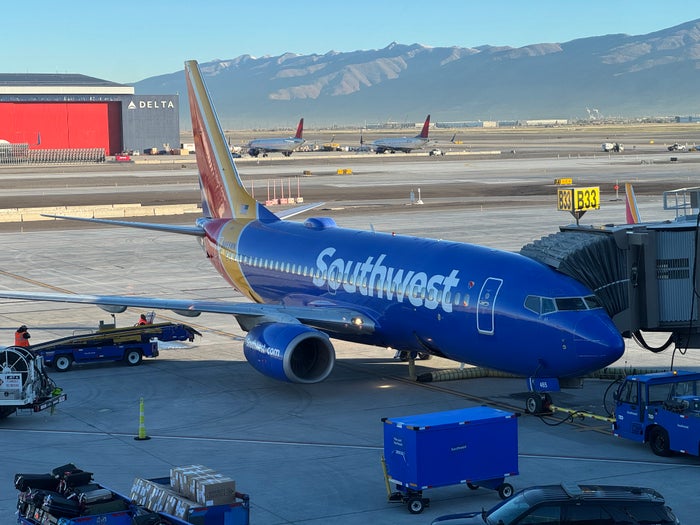
Southwest currently flies to Mexico, Central America, and the Caribbean. Its longest routes today are to Hawaii and Alaska. Those are long, sure, but they still operate within the U.S. domestic framework. True long-haul international is a different beast entirely.
Is This Realistic?
This is where things get complicated.
Southwest operates an all-Boeing 737 fleet. That’s it. Every single plane in its fleet is a 737, which is a short- to medium-haul narrow-body aircraft. The 737 is not built for long-haul international flying. You won’t find lie-flat seats, proper galleys for long-duration service, or the range to reach Europe or Asia on a Boeing 737.
If Southwest is serious about this idea, it would need to acquire a completely different aircraft type — wide-body jets like a Boeing 787 or an Airbus A330. That’s not a small lift. It would mean new maintenance programs, new training pipelines for pilots and crew, new catering and inflight service standards, new airport infrastructure agreements overseas, and a whole set of regulatory approvals for international operations.
There’s also the question of seat design. Long-haul flyers — especially in premium cabins — expect lie-flat beds and proper amenities. Southwest has no experience designing, installing, or operating that kind of product. Building it from scratch while simultaneously overhauling the rest of its business model is a tall order.
None of this is impossible. Airlines have transformed themselves before. However, it would require years of work and billions in investment to do it right. That means Southwest definitely won’t be doing this in the next year or two, no matter how serious it is about long-haul flights.
Final Thoughts
Southwest exploring long-haul international flying is a genuinely curious development, and it says a lot about how aggressively the airline is rethinking what it wants to be. However, between a CEO’s conference comments and actual long-haul flights showing up on a booking page, there is an enormous amount of ground to cover.
New aircraft. New crews. New products. New markets. There’s a lot we don’t know yet, and there’s a lot that needs to happen before any of this becomes real. It’s worth watching, to say the least.