
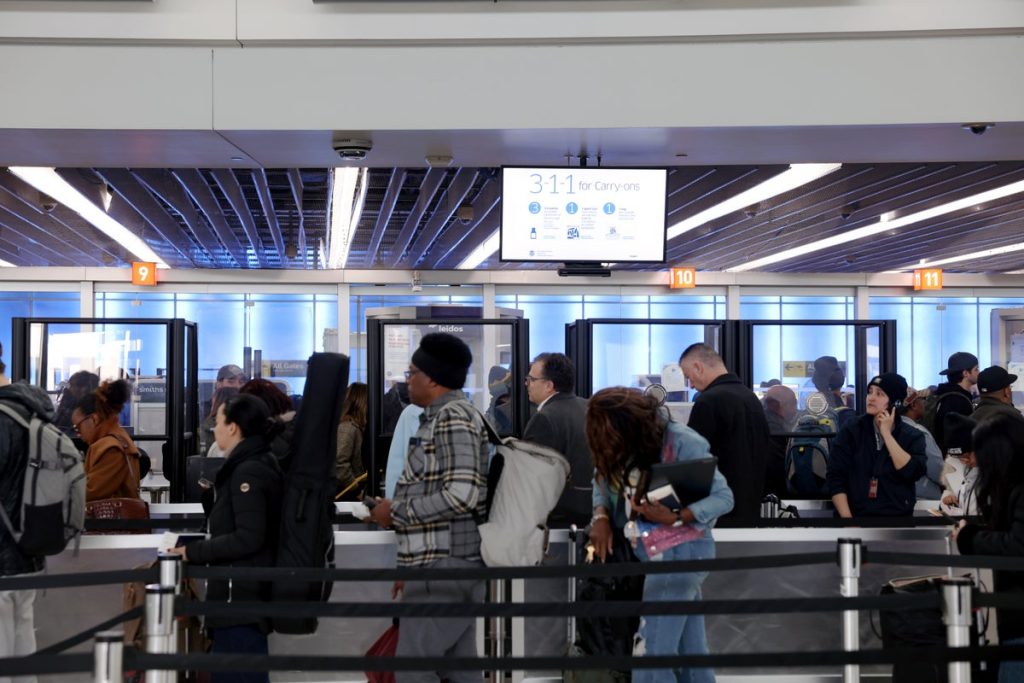
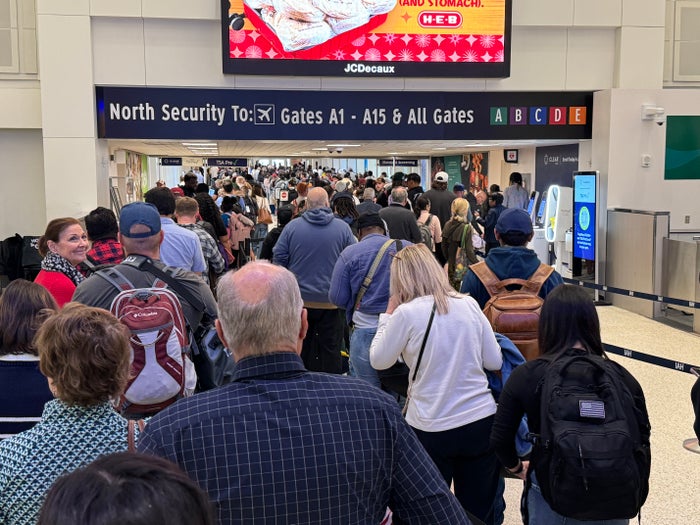
Anyone who flew through Hartsfield-Jackson Atlanta International Airport (ATL) during the February-March federal shutdown remembers the lines.
Up to 36% of TSA officers assigned to work at the world’s busiest airport didn’t show up on any given day, leading to multihour waits, canceled flights, and a fresh round of questions about whether a federal screening agency is the right model for an airport that handles more than 100 million passengers a year.
Now, Atlanta’s airport is asking that question out loud. A new study is starting to analyze whether the TSA should keep handling security at ATL.
Atlanta’s Proposal
The Atlanta City Council’s Transportation Committee voted 5-0 on Monday night to advance Resolution 26-R-3429, introduced by Councilmember Byron D. Amos. It directs the airport’s general manager to commission an independent feasibility study within 90 days evaluating whether ATL should swap out federal TSA officers for private contractors under the TSA Screening Partnership Program, or SPP.
The resolution doesn’t approve a switch. It funds a study. However, the framing in the document is direct: During the shutdown earlier this year, San Francisco (SFO), Kansas City (MCI), and Orlando Sanford (SFB) — all SPP airports — kept moving normally because private contractor payrolls are covered by preexisting federal contracts rather than annual appropriations. ATL didn’t.
The study will look at the comparative cost (TSA screening at ATL runs between $140 million and $240 million annually, according to the resolution), security performance using covert-testing and U.S. Government Accountability Office data, workforce impacts on current TSA employees, transition risks, and how other SPP airports have fared.
The resolution also calls for engagement with TSA workers, their unions, airlines, and passenger groups before any recommendation moves forward.
Why This Is a Big Deal
Roughly 20 U.S. airports currently use private screeners under SPP, but every one of them sits below the TSA’s Category X threshold. Category X is the highest-risk classification, reserved for the largest and most operationally complex airports. Hartsfield-Jackson is the only airport in the world that handles more than 100 million annual passengers, and no airport this size has tested private security — meaning ATL has no apples-to-apples comparison to look at.
That’s what makes Atlanta’s study different from prior SPP conversions. If ATL eventually applies and the TSA approves a private contractor, it would set the precedent for every other Category X airport — Los Angeles (LAX), New York City (JFK), Chicago O’Hare (ORD), and Dallas Fort Worth (DFW), for example — would look to next. The Trump administration has been pushing to expand SPP as a cost-cutting move, but its focus so far has been smaller airports. A Category X airport conversion would change the conversation entirely.
For travelers, the practical questions are simpler. TSA PreCheck and CLEAR+ would continue to operate at SPP airports. The federal rules and standards stay the same, and only the workforce changes. What changes is staffing reliability. The argument Atlanta is making is that the next time Washington can’t pass a budget, the world’s busiest airport shouldn’t grind to a halt because federal screeners aren’t getting paid.
The counterargument, which the study is also required to evaluate, is that private contracting introduces its own risks — including turnover, training quality, and accountability — at an airport where the margin for security failure is zero. It’s also worth noting that under SPP, airports apply but don’t pick their contractor. The TSA still makes the final call on who runs the checkpoint.
Final Thoughts
This is still early. A favorable committee vote and a 90-day study are a long way from a private security checkpoint in Atlanta. But the fact ATL is asking the question at all matters. If the world’s busiest airport decides federal screening isn’t working, every other major U.S. hub will have to decide whether it agrees.