
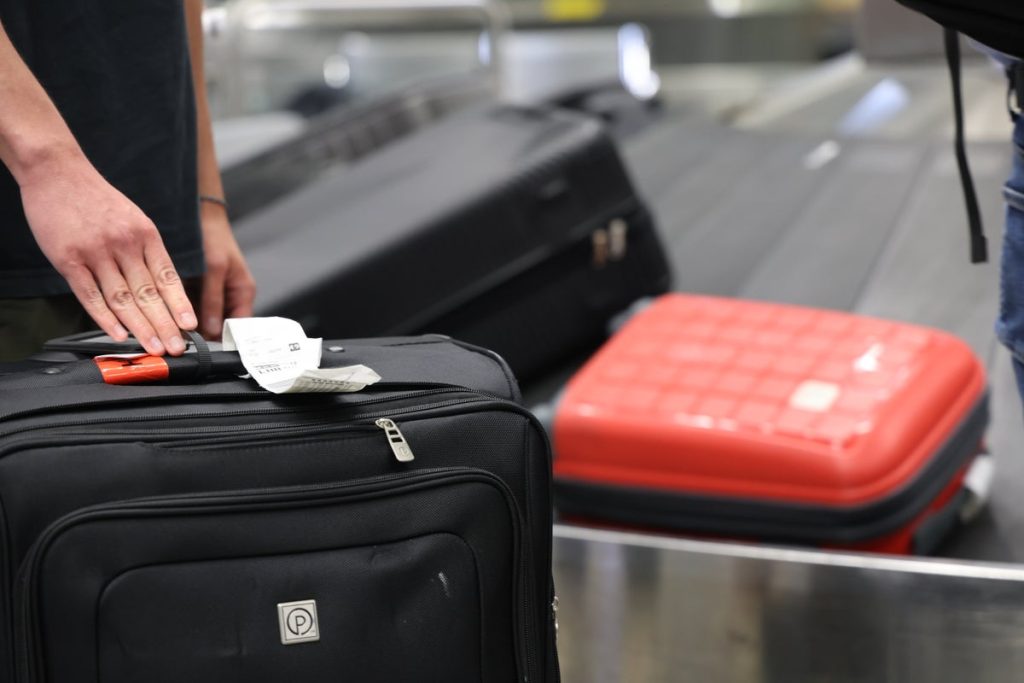
I used to ignore free checked bag perks. They were nice to have, but never something I planned around. I cared more about upgrades, priority boarding, or earning points. Bags felt like an afterthought.
Not anymore.
I’ve always been a carry-on-only kind of traveler, but traveling as a family of 5 has shifted my approach. Between my wife, 3 daughters, and everything that comes with it, I’m checking bags more often than I used to — and having my hands free at the airport is worth its weight in gold.
With airlines continuing to raise checked bag fees — and strip down what’s included in basic fares — this perk has become one of the easiest ways to save money on a trip, especially for families. So now, it’s something I plan for every trip. Here’s how I avoid paying baggage fees altogether.
The Rise of Checked Bag Fees
Over the past year, airlines have continued pushing baggage fees higher — often in ways that are easy to miss unless you’re paying attention.
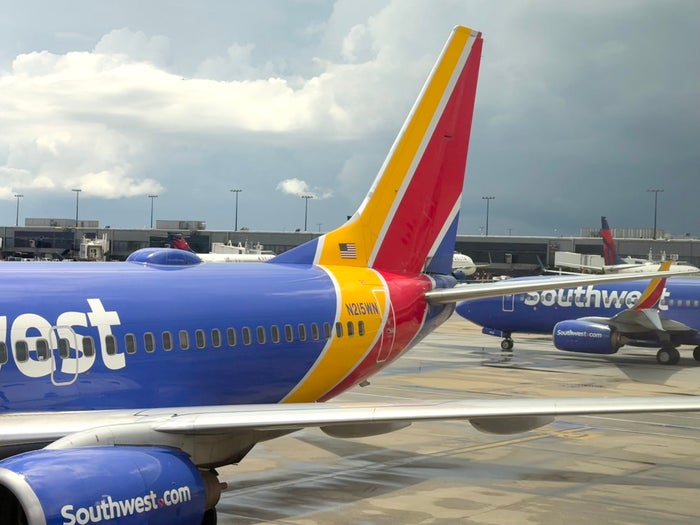
Carriers like JetBlue and American Airlines have raised fees, especially on basic or lower-tier fares, and they aren’t the only ones. Even Southwest Airlines — once known for its “2 bags fly free” slogan — is now charging for checked bags.
At the same time, basic economy has become more restrictive, sometimes limiting carry-ons or charging for items that were previously included. That means more travelers are paying for checked bags — and in some cases, even paying just to bring a full-size carry-on onboard.
What stands out is how quickly those fees add up. Paying $35 to $75 for a bag might not seem like much at first, but multiply that across multiple people, multiple bags, and a round-trip itinerary, and the total climbs fast.
For families, especially, this has become one of the most overlooked travel expenses.
How I Combat Rising Bag Fees
I’ve never really paid attention to checked bag fees. There’s almost always a way around them if you know where to look — credit cards, elite status, or booking a little smarter. What’s changed for me lately isn’t how I avoid the fees — it’s how often I actually need to.
Here are the 4 strategies I use to avoid baggage fees altogether.
1. Using Co-Branded Airline Cards Strategically
This is probably the easiest way to avoid baggage fees.
I don’t carry a ton of airline credit cards — but I make sure to have the right ones for the airlines I actually fly. Most entry-level airline cards include a free checked bag perk, usually for you and companions on the same reservation, typically for around a $95 annual fee.
In many cases, a single round-trip itinerary with checked bags can easily cost more than the annual fee, especially for a family. That really hit home for me on a recent trip back from Cancún to Miami.
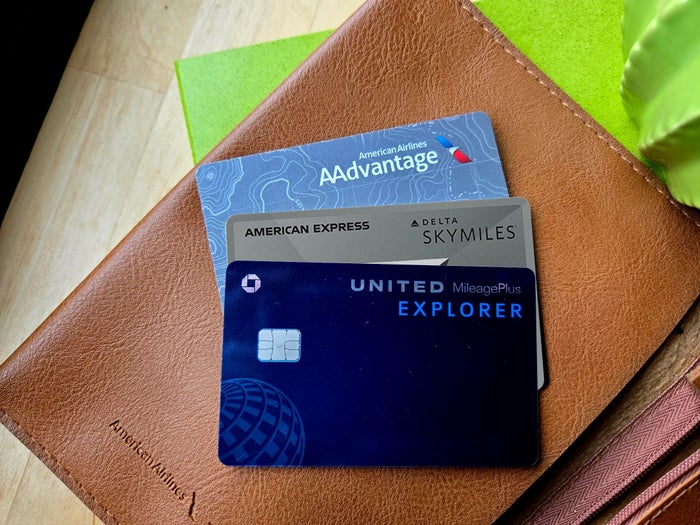
I was originally booked on American Airlines, where I have both elite status and the Citi® / AAdvantage® Platinum Select® World Elite Mastercard®, so checked bags weren’t on my mind. I was traveling with my family, so the 5 of us had 5 checked bags, all covered. Then the flight got canceled.
Instead of spending the night at a gaudy airport hotel, I grabbed the only flight left on JetBlue, which was departing in about an hour. As you’d expect, the only reasonably priced tickets left were basic fares, which meant no checked bags included.
I’d already paid for new flights, and now I was staring at baggage fees for 5 people, which adds up fast. Then I remembered I had The JetBlue Plus Card, which includes a free checked bag — even on Blue Basic fares.
It covered my whole family since we were all on the same reservation, turning what could’ve been a $500+ baggage bill into $0.
2. Leveraging Credit Card Airline Credits
Of course, not every trip lines up with an airline that you have a co-branded card with or status with. That’s where flexible premium cards come into play, especially the Platinum Card® from American Express and The Business Platinum Card® from American Express.
These cards offer an annual airline incidental fee credit of up to $200. Once you select an airline, you can use that credit to offset certain charges.
In practice, that usually covers things like checked bag fees, seat selection, and sometimes onboard purchases. I treat this as a backup plan. If I’m flying an airline I’ve selected for the credit and don’t have built-in baggage perks, I’ll use my Amex Platinum card to help pay for the bags with the credit.

Image Credit: Krakenimages via Adobe Stock, modified by Upgraded Points LLC
It’s not as seamless as a co-branded airline credit card, but it’s a solid way to reduce out-of-pocket costs when you’re mixing airlines or booking outside your usual travel patterns. That said, the biggest limitation is having to choose an airline in advance.
That’s why I also like having a more flexible option like the Sapphire Reserve for Business℠ , which comes with an up to $300 annual travel credit. Unlike Amex, there’s no airline to select — it automatically applies to just about any travel purchase, including baggage fees.
So if I’m flying an airline that doesn’t match my Amex selection — or booking something last-minute — I’ll use that card for the credit, which is a really simple way to cover baggage fees.
3. Booking Award Tickets To Reduce Costs
Another easy workaround is booking award tickets instead of paying cash.
In many cases, award tickets are booked into a higher fare class than basic economy, which means a checked bag is already included. A good example is American Airlines. When you book an award flight, it typically prices into Main Cabin (not basic economy), so you get an included checked bag.
And it doesn’t have to be booked directly through American. I’ve booked the same flights using Alaska Airlines Atmos Rewards points and still received the same baggage allowance.
This strategy works especially well when cash prices are high but award space is available. It does 2 things at once — it saves money on an expensive ticket and helps avoid baggage fees altogether. This is especially useful if you don’t have airline status or a co-branded card to cover bags.
4. Pivoting to Carry-On Only
Sometimes, the simplest option is the best one. If I can pack everything into a carry-on, I’ll do it. For shorter trips, it eliminates the problem entirely and keeps things simple.
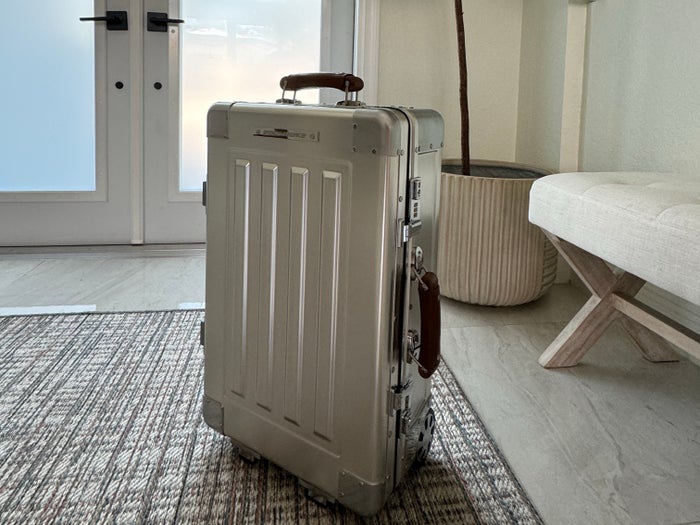
When I’m traveling solo, this is usually my default. But for family travel or longer trips, checked bags are often unavoidable, which is why I don’t rely on this as my main strategy. I treat it as a situational move, and when it works, great. When it doesn’t, I fall back on the strategies I’ve already incorporated.
Final Thoughts
Baggage fees aren’t going away anytime soon. But by holding the right co-branded cards, using premium card credits strategically, booking with points, and using a carry-on only when possible, I’ve turned what used to be an unpredictable expense into something much more manageable.
At this point, I don’t just look at the price of a flight anymore — I look at the full cost of getting there, bags included. And more often than not, I’ve already found a way to cover it.