
Qantas offers a consistently reliable business class product and experience on its domestic routes throughout Australia, and it’s one of my favorite airlines to fly, thanks to its great service.
The airline operates a fleet of mostly Boeing 717s, Boeing 737s, Airbus A220s, and Airbus A321XLRs on domestic services, though you may occasionally see other aircraft operating routes, as well. Qantas business class includes lounge access, a recliner seat on board, a choice of meal, and priority luggage handling, and with the vast distance between many Australian cities, it’s good to know you’ll arrive in comfort!
Let’s take a look at all you need to know about Qantas’ domestic business class.
1. You Have Access to the Business Lounge
When it comes to flying domestically in Australia, there are essentially 2 types of lounges you can access. The first is a Qantas Club, which is basically a paid lounge that you can subscribe to. With a business class ticket or elite status, however, you have access to the Qantas Business Lounge.
In most airports, the Qantas Club and Qantas Business Lounge are in the same precinct. You just need to follow the signs to know which way to turn.
Essentially, the lounges are separated to create exclusivity but, for the most part, offer the same benefits and services, including food.
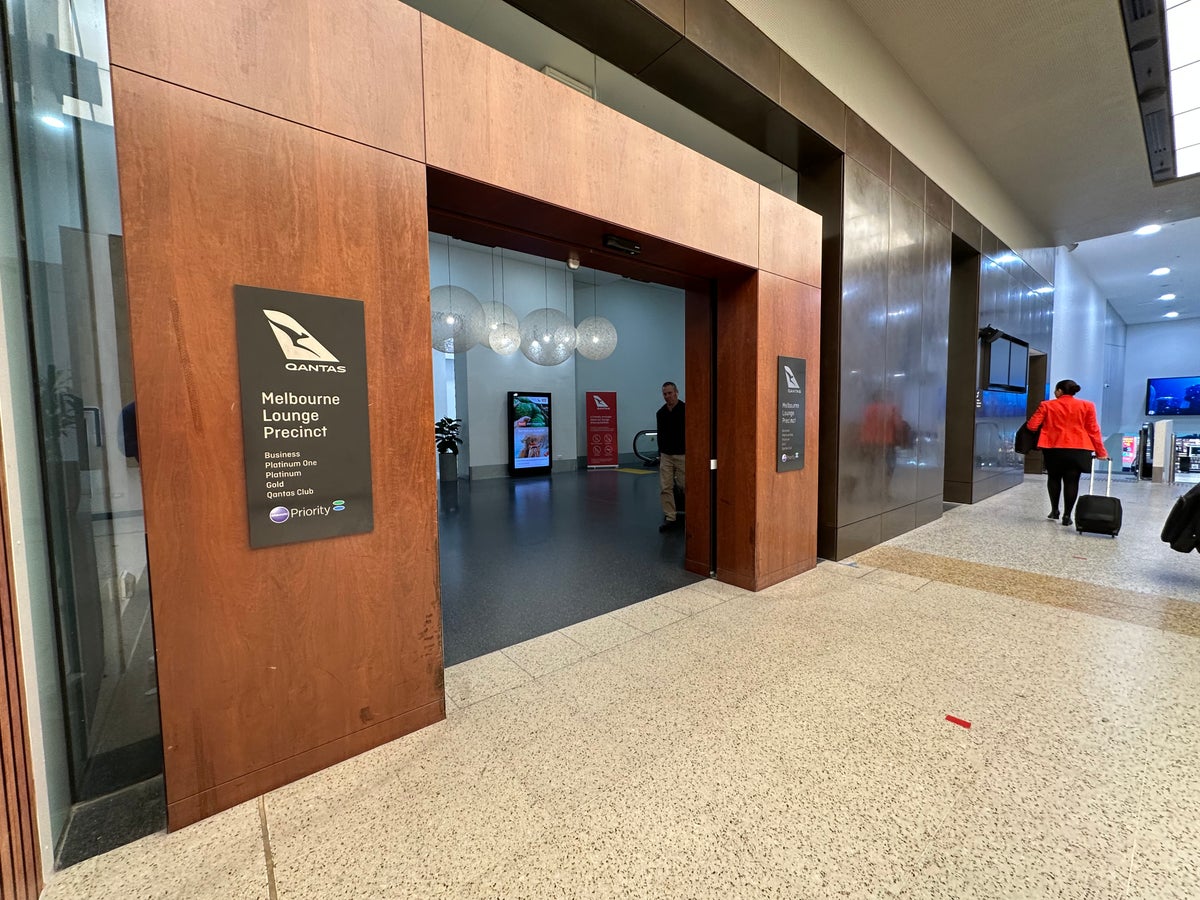
On a recent visit to Melbourne’s (MEL) Business Lounge, I found beef stir-fry with rice, vegetable curry, a make-your-own salad-and-sandwich station, as well as cheeses, meats, and other nibbles. While it’s not the best food selection in the world, I find it better than most U.S. domestic lounges. In Sydney’s (SYD) Domestic Business Lounge, the largest of the lounges in the system, there’s also a panini station with premade panini you can heat up.
In the morning, there are eggs, sausages, meats, and breads, but my favorite part of breakfast is the fresh-squeezed juice! There is a juicer where you can toss in your choice of fruits and vegetables to make a healthy and refreshing juice to start your day. I really wish this concept would come to the U.S.
One of the best features of the Business Lounge is the barista, who makes you a coffee to your liking, perfect for that morning (or afternoon) caffeine hit. You can also find a desk for ticketing assistance, a fully staffed bar, and shower facilities.
In airports where there is no Business Lounge, you can use the Qantas Club.
2. Seats Are Comfy
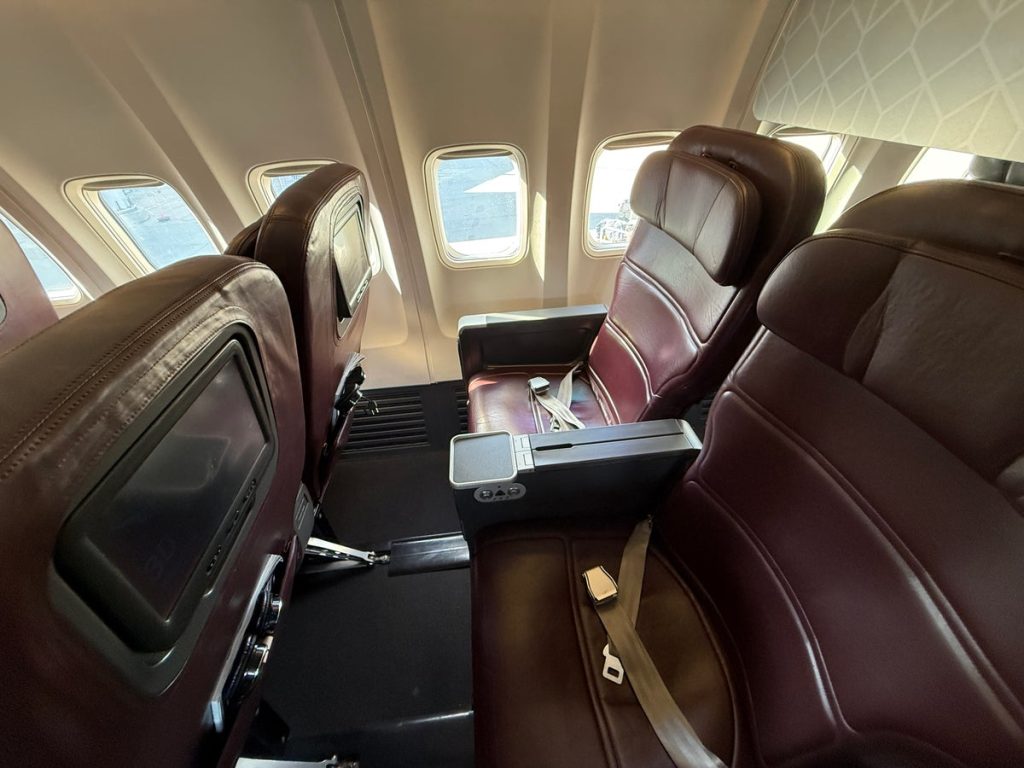
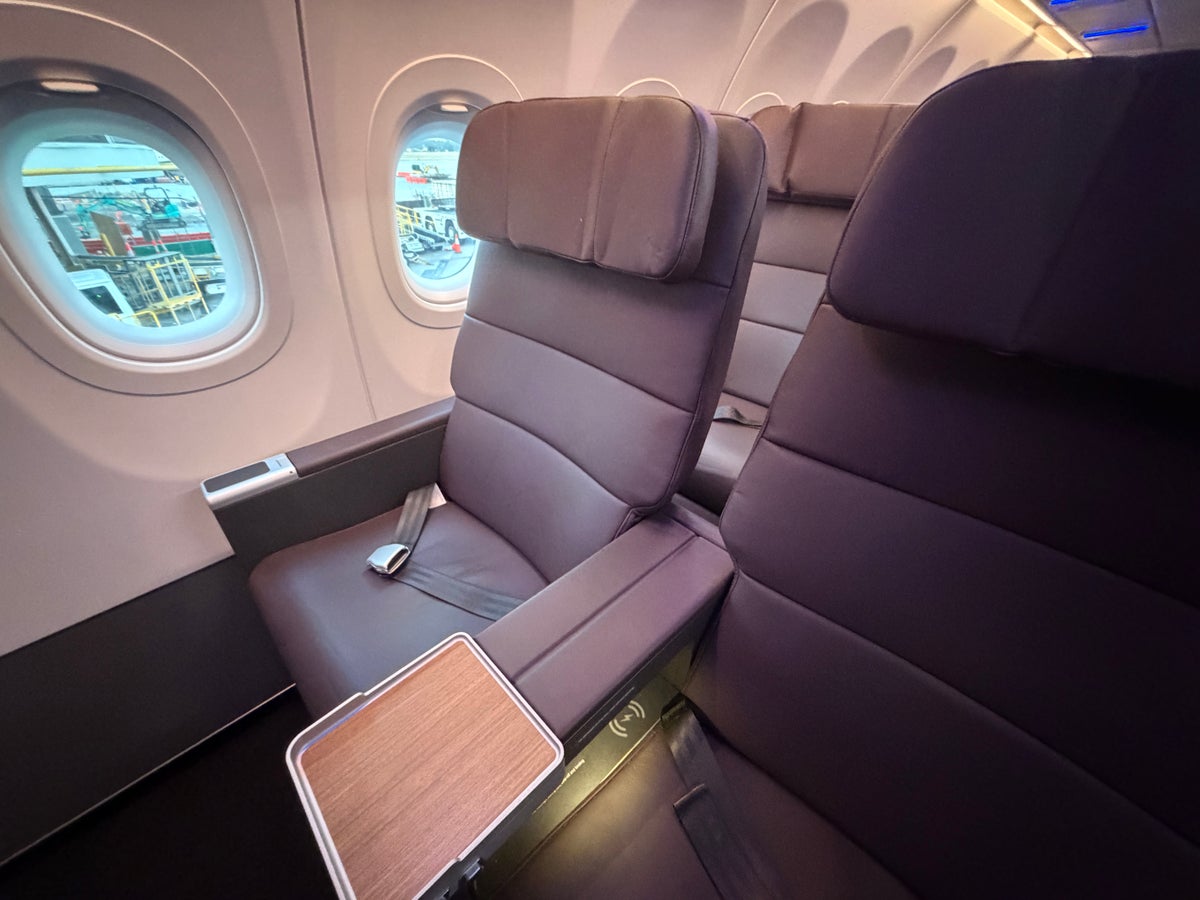
On all narrow-body domestic services, business class features a 2-by-2 layout with recliner-style seats.
Some planes have inflight entertainment built into the seat in front, but this is being phased out in favor of streaming on your personal device. As for seat comfort, I find these seats considerably more comfortable than their U.S. counterparts.
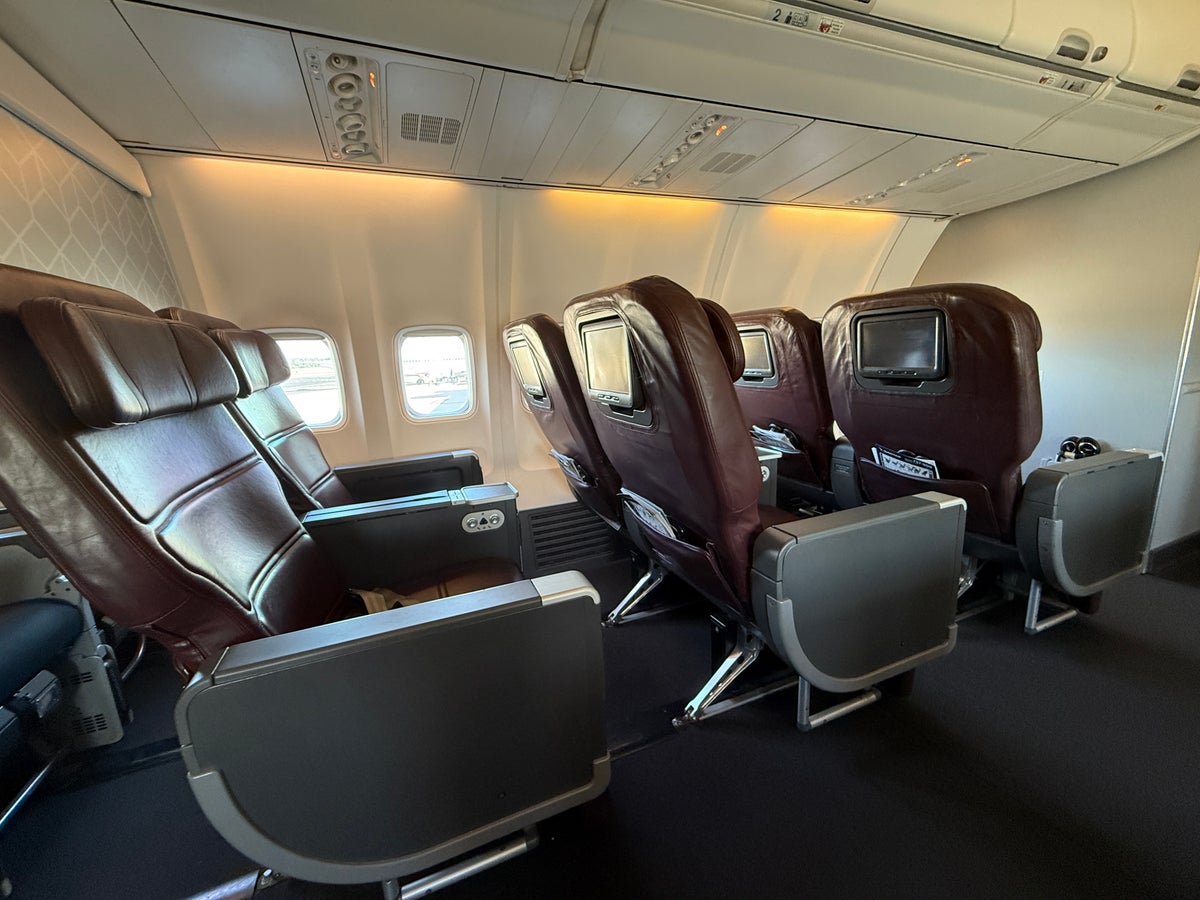
Each seat has a leg rest that slides out from behind your legs, lumbar support, and noticeable recline. With all 3 features engaged, it makes for a comfortable yet simple seat. There’s storage in the seatback pocket in front, and on newer aircraft, in the center console itself. Each seat also features an individual power port for charging your devices.
While the seat design is nothing earth-shattering, the leg rest and lumbar support, combined with the deep recline, make for a very comfortable ride, even without the more modern bells and whistles.
On many Australia flights, you don’t find people taking on carry-on bags like you’d find in the U.S. With business class, you board the plane first but don’t need to rush and store your bags, as there’s usually plenty of space in the overhead bins.
3. You’re Served a Meal on Every Route
No matter the time of day or route, you’re always served a meal on Qantas, similar to what you’d find on a European airline. I really enjoy the food on Qantas, and I think it’s some of the best food in the sky. That said, I know plenty of people who are indifferent to it, so your experience may vary.
Even on the shortest of routes, there is full service. Last summer, I flew from Sydney to Canberra (CBR), a flight that lasted maybe 45 minutes in the air, if that. Sure enough, a hot meal was served once we got up into the sky, and you could tell the flight attendants were springing into action to try and complete the service before it was time to land.
Qantas always seems to take meal orders from front to back, so if ordering your preferred meal is important to you, you may want to sit closer to the front. Preordered meals are available in the premium cabin, but only for special categories such as vegetarian or diabetic. Among the standard options, there’s no way to guarantee a specific meal beforehand.
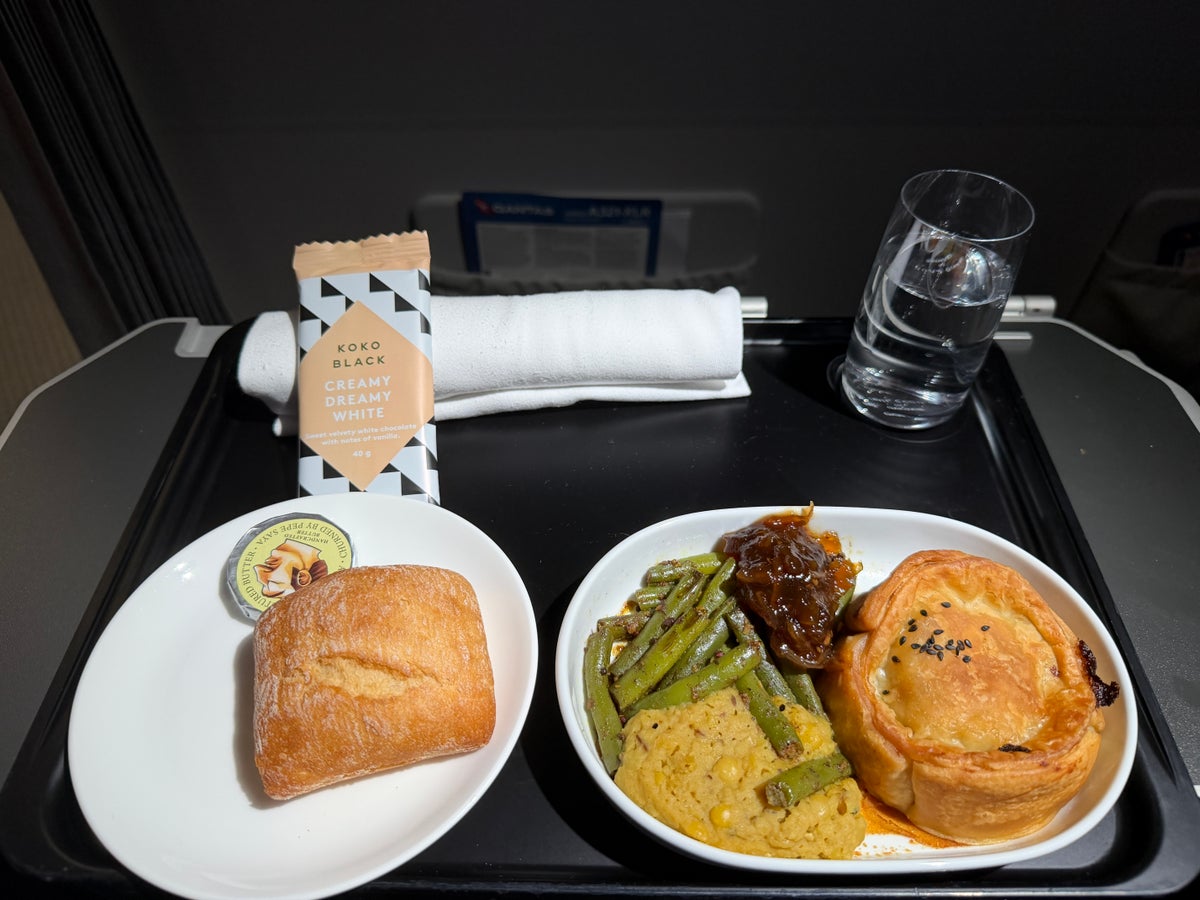
There’s usually a meat or vegetarian dish to choose from, but I have been on Qantas flights where both selections contained meat, so you may want to plan ahead if you’re vegetarian. On shorter flights, you might expect something simple, such as a toasted sandwich, while on longer flights, there are heartier options like pies, salads, or pasta.
One thing I have noticed on Qantas flights is that the catering numbers may not be even. For example, there may be far more of one dish than another. On a recent flight for 16 business class passengers, only 3 salads were catered, and the rest were a pasta dish, so I’m not sure how Qantas determines how many of each option to cater.
A full bar is always available, and you simply need to request a drink from the inflight manager who comes down the aisle. On Qantas flights, the head person on the flight is called a manager (in economy class, you’re overseen by a supervisor), and they are always the person who serves business class, so you’re always getting the highest level of service on board.
I find Qantas to be hit-or-miss with drink refills, especially on shorter flights. It seems like most flights offer only 1 pass through the cabin to offer a beverage. If you want a refill, you really have to make an effort to get one. Some inflight managers, however, are better than others in offering these top-ups.
4. Great Redemption With British Airways Avios
If you’re looking to fly Qantas Business on a domestic flight and want to pay cash, be prepared to open up your wallet. Business class flights are extremely pricey, and it’s not uncommon to find that a simple flight like Sydney to Melbourne costs close to $1,000 for the one-way trip, even though a similar city pair in the U.S. might only cost a couple of hundred dollars upfront. Even shorter hops, or those with dozens of frequencies a day, are priced much higher than most people are comfortable paying. The Australian market is quite different, thanks to less competition.
You save significantly when you use miles to cover your flight costs. Contrary to what you may think, Qantas’ own Frequent Flyer loyalty program is not the best for these redemptions. The absolute best currency to use to book a Qantas flight is The British Airways Club Avios. Avios charges based on segment and distance, so the shorter the segment, the fewer miles it costs.
For Sydney to Melbourne, you can find flights for 6,500 Avios in economy class and 14,000 Avios in business class. For Sydney to Perth (PER), that jumps to 14,500 Avios in economy class and 43,000 Avios in business class. Taxes usually run about $20 in each direction.
It’s worth paying attention to flights that require a connection, however. Because British Airways charges by segment, you pay the cost per flight if you have more than 1 flight in your itinerary. It might be beneficial to use a program like American Airlines AAdvantage, which allows up to 4 flights in an itinerary for the same amount of mileage, so long as they’re within the same region. For 20,000 AAdvantage miles, you could fly Sydney to Melbourne to Hobart (HBA), for example, or Cairns (CNS) to Sydney to Perth — something you’d pay many more Avios for if using British Airways.
Award availability on Qantas can be hit-or-miss, however. If you’re purchasing far in advance, there tends to be decent availability, but if you’re looking for an upcoming flight, you may be disappointed to find no award space. Once domestic award space is gone, I find it very rare for Qantas to add additional saver rewards seats, though it does occasionally happen. This can be frustrating, especially if you’re connecting from an international flight and need a domestic segment to reach your final destination.
You may need to be creative with your routing. If Sydney to Melbourne isn’t available, search for Sydney to Canberra to Melbourne or Sydney to Adelaide (ADL) to Melbourne, or even more out-of-the-way routes like Sydney to Brisbane (BNE) to Melbourne. If flying up front is important to you, you may want to look for additional connecting cities to increase the likelihood you find Qantas domestic business class award space.
5. Flights Operate Frequently
In Australia, you can find flights between many cities departing almost every half hour. A city pair like Melbourne to Sydney can see dozens of flights a day on Qantas, not counting those on other airlines like Jetstar or Virgin Australia.
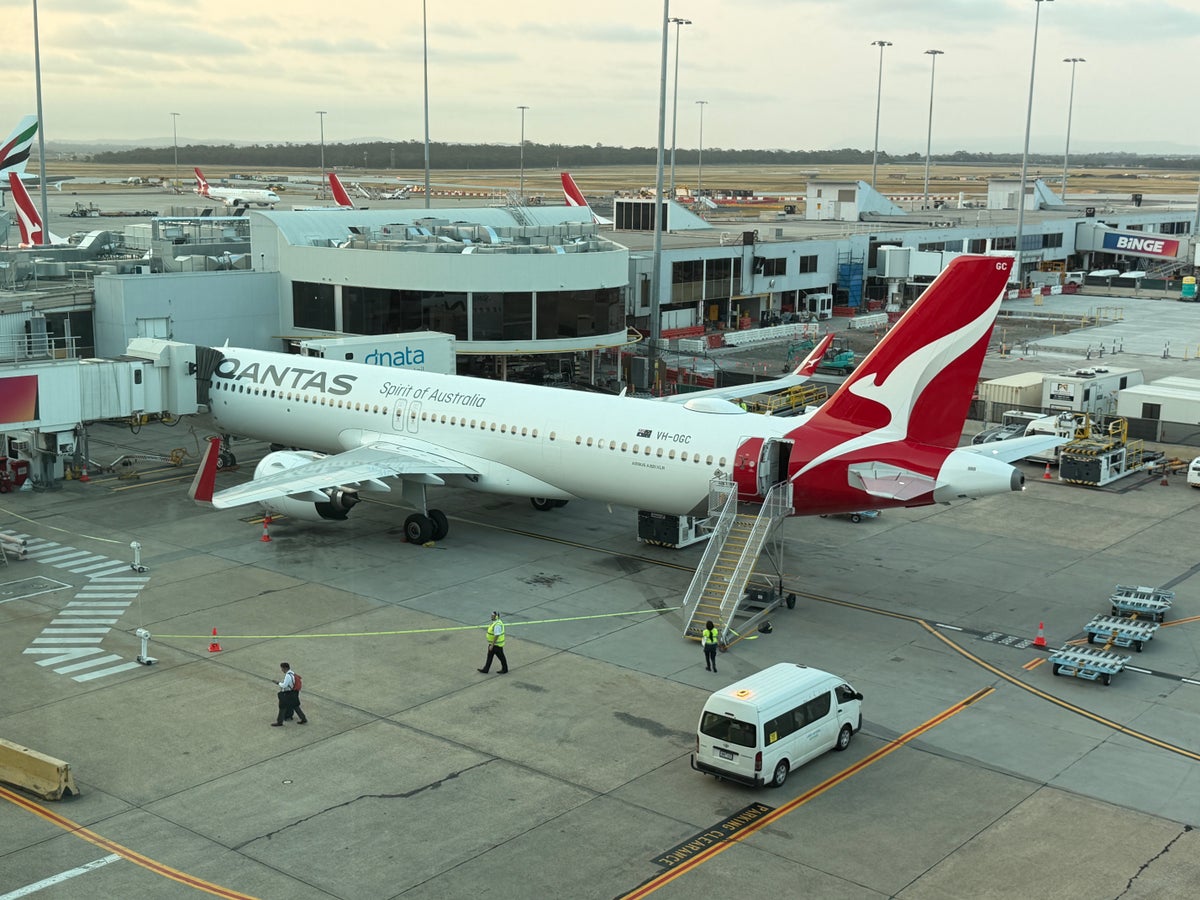
Because of this, it’s important to pay attention to several things:
- With award availability sometimes being stingy, it’s important to check all departures throughout the day. More flights could mean more chances to snag an award seat.
- With multiple departures, Qantas often oversells flights and asks passengers to move to an earlier or later flight (of course, at no extra charge). I’ve shown up to the airport several times only to be bumped to a flight a half hour later. Conversely, it’s not uncommon to be placed on an earlier flight if there are seats for sale. Qantas does this to free up space on later flights to prevent overbooking.
- Some city pairs, especially between Perth and Sydney, Melbourne and Sydney, and Brisbane and Sydney, have daily wide-body flights. You may find an A330 or a 787 operating these routes, which are traditionally served by smaller planes. If you can snag one of these flights, you’ll find a flat bed in business class. Though you receive the same service and meal on board, the seat is much more comfortable!
Final Thoughts
I really enjoy Qantas domestic business class. While it’s not overly fancy, it is certainly a premium experience, and I enjoy Qantas lounges, the onboard service, and comfy seats. It’s also a great redemption opportunity with British Airways Avios and makes for the best way to get around Australia!